

Operating a business across state lines introduces a complex web of regulatory requirements that can quickly overwhelm even the most seasoned entrepreneurs. According to recent industry analyses, companies expanding into multiple jurisdictions face a 40% increase in compliance overhead during the first two years of operation. This surge in administrative burden often stems from a lack of unified legal strategy, leading to costly penalties and operational delays. Navigating these challenges requires more than just basic registration; it demands a proactive, integrated approach to legal resource management that aligns with your growth trajectory.
1. Optimizing Corporate Structure and Registration
The foundation of any multi-state operation is a robust corporate structure. Many business owners mistakenly believe that registering in their home state is sufficient. This is a critical error. When you operate in another state, you are considered a "foreign" entity there and must register to do business. This process, known as qualification, ensures that your company is subject to local laws and can be sued in local courts.
Understanding Foreign Qualification
Foreign qualification is not merely a formality. It establishes your legal presence and protects your corporate veil. Without it, you may lose the liability protection that an LLC or corporation provides. Furthermore, failure to qualify can result in significant fines and the inability to enforce contracts in that state. For businesses in the hospitality and multifamily real estate sectors, this is particularly crucial due to the high volume of transactions and regulatory scrutiny involved.
Choosing the Right Jurisdiction
While Delaware remains a popular choice for incorporation due to its well-established case law, it is not always the best option for multi-state operators. If your primary operations are in Texas or New York, incorporating in those states might offer more practical advantages. The legal landscape in these jurisdictions is highly developed, with specific statutes that address the nuances of local business practices. Warren Kalyan, established in 1980, has built a well-established presence in Texas for over four decades and in New York for close to two decades, providing deep insights into these specific regulatory environments.
For more details on entity formation and governance, visit our services page to explore how we can assist with your structural needs.
2. Mastering Regulatory Compliance and Licensing
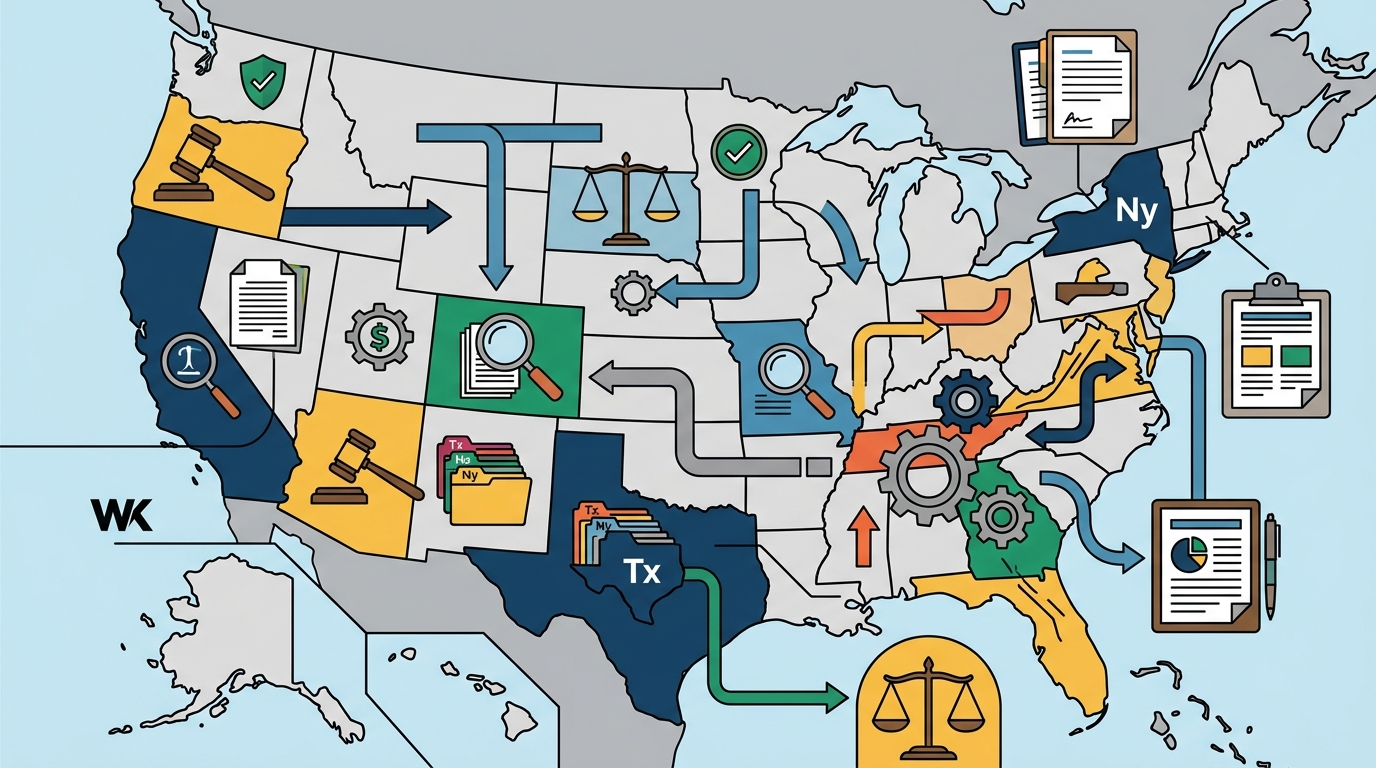
Compliance is the most visible aspect of multi-state operations. Each state has its own set of rules regarding taxation, employment, and industry-specific licensing. Ignoring these differences can lead to severe consequences, including audits, fines, and operational shutdowns.
Industry-Specific Licensing
For businesses in the hospitality sector, liquor licensing is a major hurdle. The process for obtaining a liquor license varies drastically between Texas and New York. In Texas, the Texas Alcoholic Beverage Commission (TABC) oversees the issuance of permits, while in New York, the Alcohol Beverage Control (ABC) board manages a more complex, discretionary system. We run a high-volume hospitality and liquor licensing practice across both states, shepherding restaurants, bars, and hotels through original applications, transfers, and the full regulatory life cycle.
Tax Nexus and Sales Tax
The concept of "nexus" determines when a business has sufficient connection to a state to be required to collect and remit sales tax. With the rise of e-commerce and remote work, nexus rules have expanded significantly. Businesses must monitor their physical and economic presence in each state to ensure they are compliant. Failure to do so can result in back taxes and penalties that exceed the original revenue generated.
Stay updated on regulatory changes by reading our latest insights on business law and compliance.
3. Strategic Litigation and Dispute Resolution
Even with perfect compliance, disputes are inevitable in multi-state operations. These can range from partnership disagreements to landlord-tenant conflicts. Having a litigation strategy that spans multiple jurisdictions is essential for protecting your equity and control.
Business Litigation and Partnership Disputes
Business divorces, member disputes, and breach of fiduciary duty claims are common in growing companies. When these disputes arise, the choice of venue and applicable law can determine the outcome. Our disputes practice steps in with demand letters, injunctive relief, arbitration, and trial-ready advocacy. We focus on protecting our clients' equity, control, and economic interests, ensuring that legal machinery works in your favor.
Landlord/Tenant Litigation
For multifamily real estate operators, high-cadence dockets require precision and speed. We operate a high-volume residential and commercial landlord/tenant litigation and eviction platform purpose-built for the multifamily industry. This allows us to handle high-volume cases with the same discipline we bring to complex M&A deals.
Learn more about our business litigation services and how we can protect your interests.
4. Leveraging Technology for Legal Efficiency
Innovation is key to managing legal resources effectively. Warren Kalyan leverages innovative technology and digital-enabled processes to meet the current demands of the legal field. This includes secure client portals, automated document management, and data-driven compliance tracking.
Digital-Enabled Processes
By integrating technology into our workflow, we reduce the time spent on administrative tasks and increase the value of our legal advice. This approach sets new standards for what is possible in legal service delivery. Pairing in-depth technical knowledge with unrelenting advocacy, we deliver the creative, strategic, and value-driven representation our clients need to succeed.
Explore our e-books for deeper insights into legal technology and compliance strategies.
Key Takeaways
- Foreign Qualification is Mandatory: Operating in a state without proper registration exposes you to liability and contractual enforcement issues.
- Industry-Specific Licensing Varies: Liquor licenses and hospitality permits require specialized navigation of state-specific regulatory bodies like TABC and NY ABC.
- Compliance Overhead Increases: Multi-state operations typically see a 40% increase in compliance costs, necessitating proactive legal resource planning.
- Established Local Presence Matters: Firms with decades of experience in specific states, like Warren Kalyan in Texas and New York, provide critical strategic advantages.
- Technology Enhances Efficiency: Digital-enabled legal processes reduce administrative burden and improve response times for compliance and litigation.
- Integrated Legal Support: Combining transactional insight with litigation strength under one firm ensures cohesive strategy from formation to exit.
Frequently Asked Questions
What is foreign qualification?
Foreign qualification is the process by which a business entity registered in one state registers to do business in another state, thereby becoming a "foreign" entity in that new jurisdiction.
Why is liquor licensing different in Texas and New York?
Liquor licensing differs because each state has its own regulatory agency and statutory framework. Texas uses a point-based system managed by the TABC, while New York uses a discretionary system managed by the ABC board, which can be more complex and unpredictable.
How does nexus affect sales tax?
Nexus determines when a business has a sufficient connection to a state to be required to collect and remit sales tax. Economic nexus, in particular, has expanded due to online sales, requiring businesses to monitor their revenue thresholds in each state.
What are the benefits of a full-service business law firm?
A full-service firm provides integrated support, combining transactional, operational, and litigation expertise. This ensures that legal strategies are aligned across all aspects of the business, from formation to exit.
How can technology improve legal resource management?
Technology streamlines document management, enhances communication, and automates compliance tracking, allowing legal teams to focus on high-value strategic advice rather than administrative tasks.
What is the role of a business court?
Business courts specialize in handling complex commercial disputes, providing faster resolution times and judges with specialized knowledge in business law, which is crucial for multi-state operations.
When should I seek legal counsel for expansion?
You should seek legal counsel before entering a new state to ensure proper registration, compliance with local laws, and protection of your intellectual property and contracts.
Schedule Your Consultation
Expanding your business across state lines is a significant milestone that requires careful legal planning. Do not leave your compliance and liability protection to chance. Partner with a firm that understands the nuances of Texas and New York business law. Contact Warren Kalyan today to schedule a time to chat and ensure your multi-state operations are built on a solid legal foundation. Visit our contact page to get started.