

What Strategies Can Mitigate Legal Disputes in Real Estate Transactions?
Real estate transactions are among the most complex financial undertakings a business can execute. According to recent industry analyses, over 60% of commercial real estate deals encounter significant legal friction during the due diligence phase, often leading to delayed closings or costly litigation. These disputes frequently stem from ambiguous contract language, undisclosed environmental liabilities, or zoning non-compliance. For business owners in Texas and New York, navigating these pitfalls requires more than just standard legal counsel. It demands a proactive, integrated strategy that combines transactional precision with litigation-ready foresight. This guide outlines the critical frameworks Warren Kalyan employs to protect client equity and ensure smooth execution from formation to exit. (Legal Services at Warren)
The Role of Comprehensive Due Diligence
Due diligence is the first line of defense against post-closing disputes. In real estate, "buyer beware" is the default legal principle, meaning the buyer assumes the risk of any defects not explicitly disclosed. A superficial review of title reports or physical inspections can leave critical gaps that later manifest as breach of contract claims or indemnification demands. (Business Law Blog Texas)
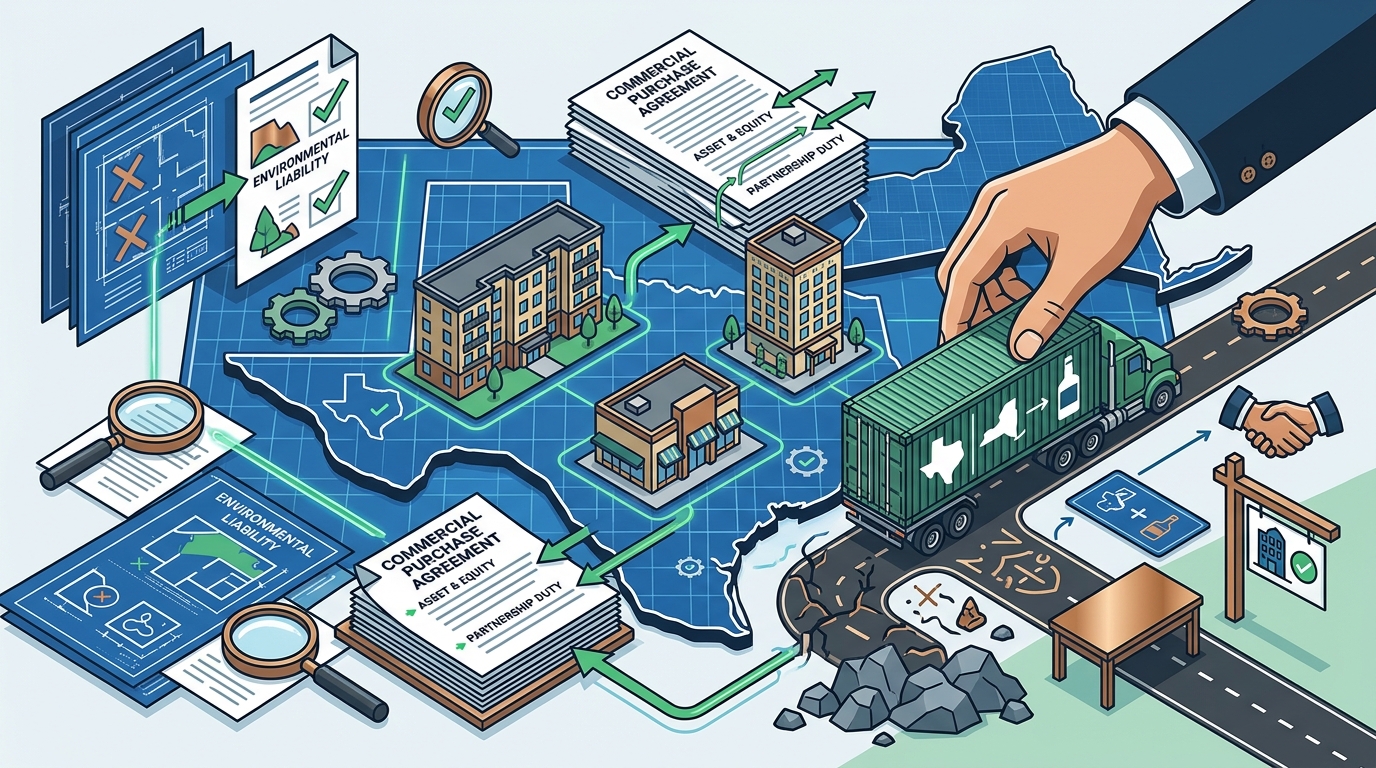
Effective due diligence goes beyond checking boxes. It involves a forensic examination of the property's legal history, environmental status, and operational compliance. For instance, in multifamily real estate, understanding the tenant lease structure and pending eviction dockets is crucial. Warren Kalyan operates a high volume residential and commercial landlord/tenant litigation and eviction platform purpose built for the multifamily industry. This means we see the litigation risks before they become liabilities. By integrating litigation insights into the due diligence phase, we help clients identify hidden exposure in high-cadence dockets that standard transactional lawyers might overlook.
Environmental liabilities are another major source of dispute. The Comprehensive Environmental Response, Compensation, and Liability Act (CERCLA) imposes strict liability on property owners. If a previous tenant contaminated the site, the new owner can be held responsible for cleanup costs that far exceed the property's value. Mitigating this requires specialized Phase I and Phase II environmental site assessments, along with robust indemnification clauses in the purchase agreement. According to the U.S. Environmental Protection Agency, environmental cleanup costs can average millions of dollars for commercial properties, making early detection essential.
Structuring Contracts for Dispute Prevention
The purchase and sale agreement (PSA) is the blueprint of the transaction. Ambiguity in this document is the primary fuel for litigation. Key terms such as "material adverse change" (MAC) clauses, closing conditions, and representations and warranties must be drafted with extreme precision. A MAC clause, for example, defines what constitutes a significant negative change in the property's value or operation that allows the buyer to walk away. If poorly defined, sellers often argue that minor fluctuations do not trigger the clause, leading to disputes.
Another critical area is the allocation of risk through indemnification. Standard contracts often include mutual indemnities, but sophisticated buyers push for specific indemnities for known issues, such as zoning violations or pending litigation. Entity formation and governance strategies also play a role here. Structuring the acquisition through a special purpose vehicle (SPV) can limit liability exposure, but the SPV's operating agreement must align perfectly with the PSA to avoid piercing the corporate veil in case of disputes.
Warren Kalyan's approach to contract structuring is rooted in value, efficiency, and effectiveness. We help clients synthesize strategies that protect their equity and control. This includes negotiating favorable terms for post-closing integration and ensuring that all regulatory permits are transferred correctly. Our work spans the transactional, operational, and litigation matters that drive client success, ensuring that every clause is enforceable and clear.
Navigating Zoning and Regulatory Hurdles
Zoning disputes are among the most common and costly legal battles in real estate. A property may appear viable for its intended use, only to reveal that local ordinances prohibit the proposed development or operation. In Texas, for example, the Texas Alcoholic Beverage Commission (TABC) regulates liquor licenses with strict geographic and operational requirements. A restaurant or bar operator must ensure that their license can be transferred or renewed before closing the deal.
We also run a high volume hospitality and liquor licensing practice across Texas and New York, shepherding restaurants, bars, hotels, and other on premises operators through original applications, transfers, change of officer filings, and the full regulatory life cycle. This expertise is vital for real estate transactions involving hospitality assets. If a buyer assumes a liquor license without verifying its transferability, the deal can collapse, or the buyer may face immediate operational shutdowns.
In New York City, regulatory reforms frequently impact small businesses and real estate operators. Recent announcements by NYC have introduced over 50 regulatory reforms for small businesses, including changes to storefront security gate requirements and zoning variances. Staying ahead of these changes requires active monitoring and proactive compliance strategies. Regulatory permitting is not just a bureaucratic step; it is a core component of risk mitigation. By engaging with local authorities early, clients can secure necessary approvals and avoid costly delays or denials.
Managing Financing and Capital Risks
Real estate transactions are heavily dependent on financing. Changes in interest rates, lender requirements, or capital market conditions can derail a deal. The recent changes in Small Business Administration (SBA) loan limits, such as the new $10 million ceiling, have altered the financing landscape for lower middle market buyers. According to the SBA, this increase allows more businesses to access favorable loan terms, but it also brings stricter scrutiny on the use of funds and borrower eligibility.
Mitigating financing risks involves securing commitment letters early and including financing contingencies in the PSA. These contingencies allow the buyer to back out without penalty if they cannot obtain adequate financing. However, lenders often require extensive documentation, including financial statements, business plans, and collateral appraisals. Delays in this process can cause the seller to lose confidence in the deal's viability.
Our SMB/LMM mergers and acquisitions practice is a particular area of strength, where we guide buyers and sellers through letters of intent, asset and equity purchase agreements, SBA and conventional financing, diligence, closing, and post closing integration. By aligning the financing strategy with the transaction timeline, we help clients avoid the pitfalls of undercapitalization or over-leverage, which are common precursors to post-closing disputes.
Choosing the Right Dispute Resolution Mechanism
Even with the best planning, disputes can arise. The key is to choose the right mechanism for resolution before the conflict escalates. Litigation is expensive, time-consuming, and public. Alternative dispute resolution (ADR) methods, such as mediation and arbitration, offer faster, more private, and often more cost-effective solutions.
Mediation involves a neutral third party who facilitates negotiation between the disputing parties. It is non-binding but often leads to mutually acceptable settlements. Arbitration, on the other hand, involves a neutral arbitrator who renders a binding decision. It is more formal than mediation but less so than litigation. The choice between these methods should be dictated by the nature of the dispute and the relationship between the parties.
When things get rocky, our disputes practice steps in with demand letters, injunctive relief, arbitration, and trial ready advocacy. Business litigation and partnership disputes are a core area of expertise, covering business divorces, member and shareholder disputes, breach of fiduciary duty claims, governance fights, and contract claims, where we focus on protecting our clients' equity, control, and economic interests. By including clear dispute resolution clauses in the initial contract, clients can ensure that any future conflicts are handled efficiently and predictably.
Key Takeaways
- Integrated Due Diligence: Combine transactional review with litigation insights to uncover hidden risks in title, environmental status, and tenant leases.
- Precise Contract Drafting: Use clear MAC clauses, specific indemnities, and SPV structures to allocate risk and limit liability.
- Regulatory Proactivity: Monitor local zoning and licensing changes, especially in hospitality and multifamily sectors, to avoid compliance failures.
- Financing Contingencies: Secure commitment letters early and include robust financing contingencies to protect against capital market shifts.
- ADR Strategies: Include mediation or arbitration clauses in contracts to ensure faster, private resolution of future disputes.
- Historical Expertise: Leverage a firm with over four decades of presence in Texas and nearly two decades in New York for deep regional knowledge.
- End-to-End Execution: Partner with a firm that executes from formation to exit, not just advises, to ensure seamless deal closure.
Frequently Asked Questions
What is the most common cause of real estate disputes?
The most common causes are ambiguous contract language, undisclosed defects, and zoning non-compliance. Clear drafting and thorough due diligence are the best preventive measures.
How does due diligence protect buyers?
Due diligence allows buyers to verify the property's condition, legal status, and financial performance. It provides the basis for negotiating price adjustments or walking away from a bad deal.
What is a MAC clause in a real estate contract?
A Material Adverse Change (MAC) clause allows the buyer to terminate the contract if a significant negative event occurs between signing and closing that materially affects the property's value or operation.
Why is zoning compliance critical in real estate transactions?
Zoning compliance ensures the property can be used for its intended purpose. Non-compliance can lead to fines, forced closures, or the inability to obtain necessary permits.
When should I consider arbitration over litigation?
Arbitration is often preferred for its speed, privacy, and lower cost. It is suitable for disputes where parties want to avoid public court records and maintain business relationships.
How do SBA loan changes affect real estate deals?
Changes in SBA loan limits, such as the new $10 million ceiling, expand financing options for buyers but require stricter adherence to eligibility and use-of-funds rules.
What role does entity formation play in real estate acquisitions?
Proper entity formation, such as using an SPV, limits liability exposure and protects the buyer's other assets from claims related to the acquired property.
Schedule Your Consultation
Real estate transactions are high-stakes endeavors that require more than just legal advice. They demand execution, strategic foresight, and deep industry fluency. Warren Kalyan stands alongside you as a true legal and business partner, from formation through exit. Whether you are structuring a new entity, closing an acquisition, navigating regulatory licensing, or resolving a partnership dispute, we move swiftly, efficiently, and effectively.
Do not wait for a dispute to arise. Proactive legal strategy is the best investment you can make in your real estate portfolio. Schedule a time to chat with our team today to discuss your upcoming transaction and ensure your interests are protected.