

Common Legal Mistakes in Family Business Sales and How to Avoid Them
Family business sales represent one of the most emotionally charged and legally complex transactions in the commercial landscape. According to recent industry data, over 70% of family businesses fail to transition to the next generation, and a significant portion of those that do sell encounter severe legal bottlenecks that devalue the enterprise. The complexity arises not just from financial valuation, but from the intricate web of overlapping ownership structures, informal governance, and deep-seated family dynamics. Navigating this terrain requires more than just a standard purchase agreement. It demands a strategic framework that protects both the economic interests of the sellers and the operational continuity of the business. This guide outlines the critical legal pitfalls that derail family business exits and provides the structural solutions necessary to secure a successful outcome. (Contact Us warren kalyan)
Understanding the Family Business Ecosystem
A family business is not merely a commercial entity. It is a hybrid structure where familial relationships intersect with corporate governance. This duality creates unique vulnerabilities during a sale. When the business is sold, the family dynamic often fractures if the legal framework was never designed to handle such a seismic shift. The definition of a family business is a commercial enterprise where a majority of the voting power or ownership is held by a family or a small group of individuals who are related by blood, marriage, or adoption. This definition highlights the concentration of control that makes the sale process so sensitive.
The stakes are high. A poorly executed sale can lead to protracted litigation, tax penalties, and the permanent dissolution of family harmony. Conversely, a well-structured exit can provide liquidity for retirement, fund the next generation’s education, and preserve the legacy of the enterprise. The key lies in recognizing that the legal machinery of the sale must be built years before the first offer is made. This requires a proactive approach to entity formation, governance, and regulatory compliance. For firms operating in Texas and New York, the regulatory environments add another layer of complexity, particularly in sectors like hospitality and real estate where Warren Kalyan has established deep expertise.
Mistake 1: Informal Governance and Ownership
One of the most common fatal errors in family business sales is the reliance on informal governance structures. Many family businesses operate on handshake agreements, verbal promises, and unwritten rules. While this may work during the founding phase, it becomes a liability when external buyers or investors enter the picture. Buyers require clarity. They need to know exactly who owns what, who has the authority to sign, and what the capitalization table looks like.
Informal governance leads to title defects and valuation discounts. When ownership is unclear, buyers perceive higher risk and will either walk away or offer a significantly lower price. To avoid this, family businesses must formalize their governance structures early. This includes drafting comprehensive operating agreements or bylaws that clearly define voting rights, transfer restrictions, and dispute resolution mechanisms. The process of entity formation and governance is not just a legal formality. It is the foundation of trust that allows a sale to proceed smoothly.
Warren Kalyan specializes in helping family businesses clean up their corporate records and align their governance with market standards. By addressing these issues proactively, families can present a clean, attractive asset to potential buyers. Our approach to mergers and acquisitions ensures that the legal structure supports the economic goals of the transaction. We guide clients through the intricacies of asset and equity purchase agreements, ensuring that every stakeholder’s interests are protected.
Mistake 2: Poor Estate Planning Alignment
Family business sales are often driven by estate planning goals. The founders may wish to liquidate their stake to fund their retirement or to provide for their heirs. However, a frequent mistake is treating the business sale as a standalone event rather than integrating it into a broader estate plan. This misalignment can lead to unexpected tax liabilities and legal complications that erode the net proceeds of the sale.
The definition of an estate plan is a comprehensive strategy for managing an individual’s assets during life and after death, including the transfer of wealth to heirs. When the business sale is not aligned with this plan, the family may face a liquidity crisis. For example, if the sale proceeds are not structured to minimize estate taxes, the heirs may be forced to sell other assets to pay the tax bill. This is where the expertise of a seasoned business law firm becomes critical. We help clients structure their exits to optimize tax efficiency and ensure that the wealth transfer aligns with their long-term family goals.
Our firm has extensive experience in capital raising and transactional law, which allows us to advise on the tax implications of different sale structures. Whether it is a stock sale, an asset sale, or a merger, the tax consequences can vary dramatically. By working with us early in the process, families can avoid costly mistakes and maximize the value of their exit. We also coordinate with tax advisors and estate planners to ensure a cohesive strategy that protects the family’s legacy.
Mistake 3: Inadequate Due Diligence Preparation
Due diligence is the process by which a buyer investigates the business before finalizing the sale. For family businesses, this phase is often where hidden problems surface. If the business has not been prepared for due diligence, the buyer may uncover issues that were previously ignored or hidden. These can include unpaid taxes, pending litigation, regulatory violations, or inconsistent financial records.
Inadequate due diligence preparation is the primary cause of deal collapse. When a buyer discovers material issues during their investigation, they will either demand a lower price or terminate the deal entirely. To avoid this, family businesses must conduct their own internal due diligence before approaching the market. This involves reviewing all contracts, leases, employment agreements, and regulatory filings. It also means ensuring that the financial statements are accurate and auditable.
Our firm offers comprehensive due diligence support to help families identify and resolve potential issues before they become deal-breakers. We help clients organize their corporate records, resolve outstanding legal disputes, and ensure compliance with all applicable regulations. By presenting a clean and well-documented business, families can command a higher price and close the deal more quickly. This proactive approach is particularly important in industries like hospitality and real estate, where regulatory compliance is complex and heavily scrutinized.
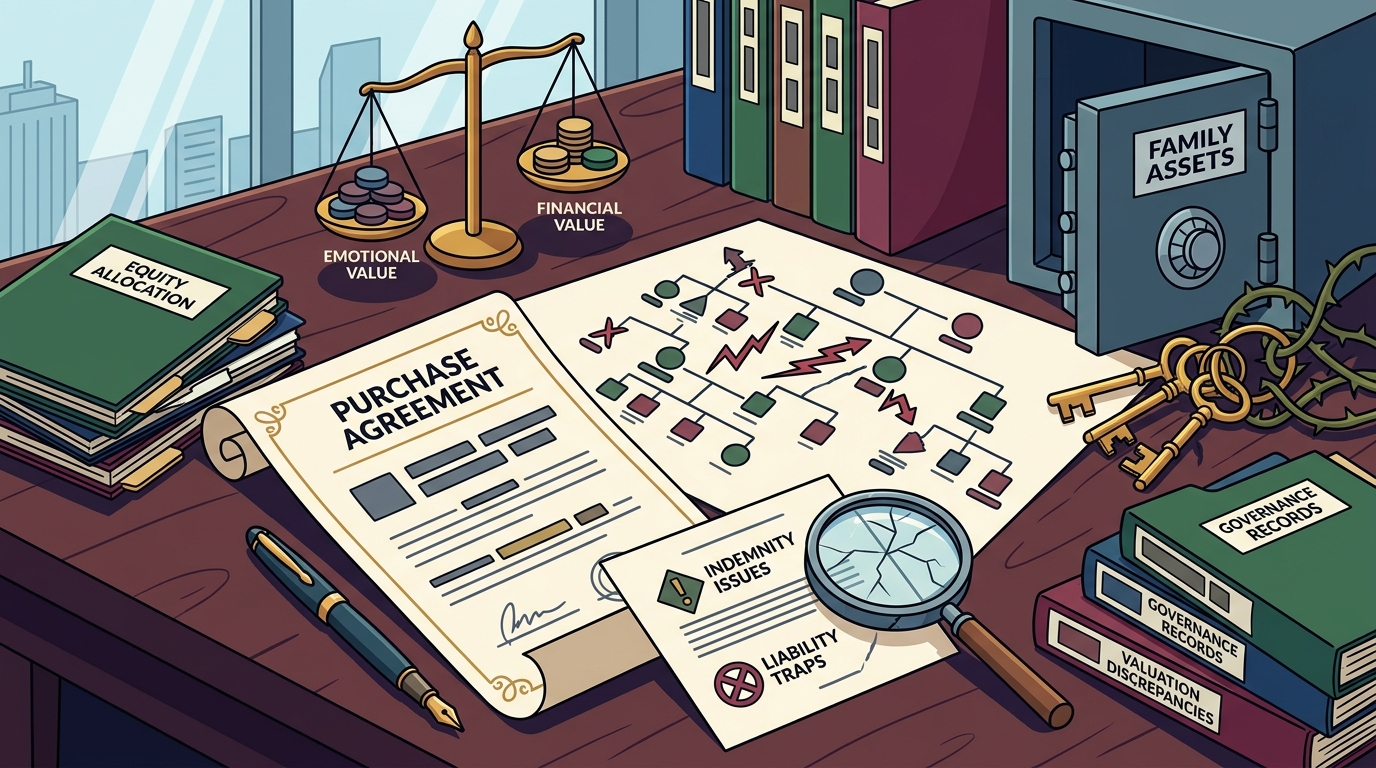
Mistake 4: Tax-Inefficient Structuring
Tax efficiency is a critical component of any business sale. However, many family businesses fail to structure their transactions in a way that minimizes their tax burden. This can result in a significant portion of the sale proceeds being lost to federal and state taxes. The definition of tax-efficient structuring is the strategic arrangement of a transaction to legally minimize the total tax liability for all parties involved.
There are several ways to structure a business sale, each with different tax implications. A stock sale may allow for capital gains treatment, while an asset sale may trigger ordinary income tax rates. Additionally, the choice of entity, such as an LLC or a corporation, can affect the tax outcome. Family businesses must work with experienced legal and tax advisors to determine the optimal structure for their specific situation.
Warren Kalyan provides strategic counsel on transaction structuring to help families maximize their after-tax proceeds. We analyze the financial and legal implications of each option and recommend the structure that best aligns with the family’s goals. Our team also assists with the negotiation of tax-related provisions in the purchase agreement, ensuring that the family is protected from unexpected liabilities. By focusing on tax efficiency from the outset, families can ensure that the fruits of their labor are preserved for future generations.
Mistake 5: Emotional Decision Making Over Strategy
Perhaps the most insidious mistake in family business sales is allowing emotions to drive decision-making. The sale of a family business is not just a financial transaction. It is an emotional event that can trigger feelings of loss, betrayal, and anxiety. These emotions can lead to poor decisions, such as accepting a lowball offer out of fear or rejecting a fair offer due to pride.
Emotional decision-making often leads to suboptimal outcomes and prolonged disputes. To avoid this, families must establish a clear strategic framework for the sale. This includes defining their goals, setting a timeline, and establishing a decision-making process that includes objective advisors. It is also important to communicate openly with family members about the reasons for the sale and the expected outcomes. By managing emotions through clear communication and professional guidance, families can make rational decisions that serve their long-term interests.
Our firm serves as a strategic partner to families throughout the sale process. We provide objective advice, help manage family dynamics, and ensure that the legal process proceeds efficiently. By combining legal expertise with emotional intelligence, we help families navigate the complexities of the sale with confidence and clarity. This holistic approach is what sets us apart as a leading business law firm in Texas and New York.
Key Takeaways
- Formalize Governance Early: Informal ownership structures are a major red flag for buyers and can lead to valuation discounts or deal collapse.
- Align with Estate Plans: The business sale must be integrated into the broader estate plan to avoid liquidity crises and excessive tax burdens.
- Prepare for Due Diligence: Conduct internal due diligence to identify and resolve issues before approaching the market to maintain buyer confidence.
- Optimize Tax Structure: Choose the transaction structure (stock vs. asset) carefully to minimize tax liability and maximize net proceeds.
- Manage Emotions: Establish a strategic framework and rely on objective advisors to prevent emotional decisions from derailing the sale.
- Leverage Expert Counsel: Work with a firm like Warren Kalyan that understands the unique complexities of family business transactions.
- Focus on Legacy: The goal of the sale should be to preserve the family legacy while securing financial stability for future generations.
Frequently Asked Questions
What is the most common legal mistake in family business sales?
The most common mistake is relying on informal governance structures. Buyers require clear ownership and authority, and the lack of formal documentation can lead to title defects and valuation discounts.
How does estate planning affect a family business sale?
Estate planning determines how the sale proceeds are distributed and taxed. Without alignment, families may face unexpected tax liabilities that erode the net value of the sale.
Why is due diligence preparation critical for family businesses?
Due diligence reveals hidden issues like unpaid taxes or pending litigation. Preparing for it ensures that the business appears attractive to buyers and prevents deal collapse.
What is the difference between a stock sale and an asset sale?
A stock sale transfers ownership of the entire entity, while an asset sale transfers specific assets. The tax implications and liability exposure differ significantly between the two.
How can Warren Kalyan help with a family business sale?
We provide comprehensive legal counsel, including entity formation, transaction structuring, due diligence support, and dispute resolution, to ensure a smooth and successful exit.
What role does regulatory compliance play in the sale?
Regulatory compliance, especially in industries like hospitality and real estate, is heavily scrutinized. Ensuring compliance prevents legal hurdles and protects the buyer from future liabilities.
Can family disputes derail a business sale?
Yes, family disputes can halt a sale entirely. Establishing a clear decision-making process and managing emotions through professional guidance is essential to prevent this.
Secure Your Legacy with Expert Counsel
The sale of a family business is a pivotal moment in your family’s history. It requires not just legal expertise, but a deep understanding of the emotional and strategic dynamics at play. Warren Kalyan is committed to empowering our clients' success through value-driven partnership. We don't just advise. We execute, from formation through exit.
Our firm has built a well-established presence in Texas for over four decades and in New York for close to two decades. We are a full-service business law firm committed to helping families navigate the complexities of business sales with confidence and clarity. Whether you are structuring a new entity, closing an acquisition, or executing a sale, we move swiftly, efficiently, and effectively, so you can stay focused on your family’s future.
Do not let legal mistakes jeopardize your legacy. Contact us today to schedule a consultation and learn how we can help you secure a successful and profitable exit for your family business.