

Negotiating a commercial lease for a hospitality venue is not merely a real estate transaction. It is a complex legal framework that dictates the operational viability of your business. According to recent industry analyses, over 60% of hospitality failures in the first three years are linked to unfavorable lease terms rather than poor management. This statistic highlights why legal expertise is critical before you sign on the dotted line. At Warren Kalyan, we understand that your lease is the foundation of your business model. We help you navigate the intricate web of zoning laws, licensing requirements, and financial covenants that define success in this high-stakes industry.
Understanding Hospitality Lease Structures
A commercial lease for a hospitality venue differs significantly from a standard office or retail lease. The nature of your business involves high foot traffic, extended operating hours, and specialized infrastructure needs. These factors create unique risks for both landlords and tenants. Understanding the specific structure of your lease is the first step in protecting your equity.
Triple Net (NNN) vs. Gross Leases
Most hospitality leases fall into the category of Triple Net (NNN) or modified gross leases. In a NNN lease, the tenant pays base rent plus property taxes, insurance, and maintenance costs. This structure can lead to unpredictable expenses if not carefully capped. A gross lease, on the other hand, includes most or all of these expenses in the base rent. For hospitality operators, the choice between these structures impacts cash flow stability and long-term profitability.
Warren Kalyan provides strategic counsel to help you determine which structure aligns with your financial projections. We analyze the fine print to ensure that hidden costs do not erode your margins. Our team has decades of experience in Texas and New York, where regulatory environments differ significantly. We ensure that your lease terms reflect the operational realities of running a bar, restaurant, or hotel.
Exclusive Use Clauses
An exclusive use clause is a powerful tool for hospitality operators. It prevents the landlord from leasing other spaces in the same building or complex to direct competitors. For example, if you are opening a craft brewery, you may want to ensure no other brewery operates in the same property. This clause protects your market share and customer base. Without it, you risk competing with tenants who may have lower overhead or established brand recognition.
We draft and negotiate these clauses to be as specific as possible. Vague language can lead to loopholes that undermine your competitive advantage. Our goal is to secure a clear, enforceable right that supports your business model. This is part of our broader commitment to value-driven partnership, as outlined on our home page.
Critical Negotiation Points for Operators
Negotiating a lease requires more than just haggling over rent. It involves structuring the entire relationship between you and the landlord. Several key areas demand careful attention to avoid future disputes and financial strain.
Rent Escalations and Abatements
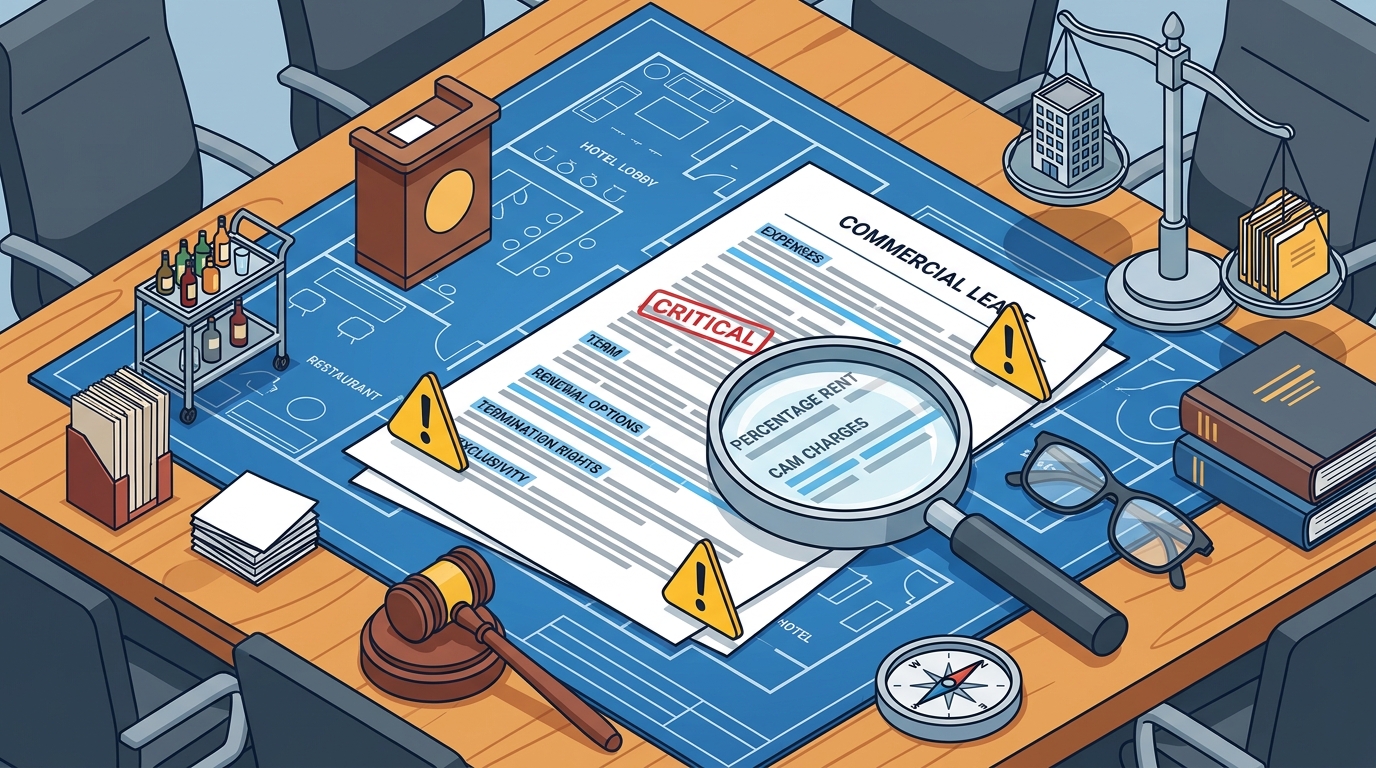
Rent escalation clauses determine how your base rent increases over time. Common methods include fixed percentage increases, Consumer Price Index (CPI) adjustments, or step-ups tied to specific dates. For new hospitality venues, rent abatements are crucial. An abatement period allows you to operate without paying rent while you build your customer base. This is often the difference between survival and failure in the early stages.
We negotiate for generous abatement periods and capped escalation rates. This ensures that your costs remain predictable as your revenue grows. Our approach is rooted in efficiency and effectiveness, helping you maximize your return on investment. You can learn more about our transactional services on our services page.
Permitted Use and Zoning
The permitted use clause defines exactly what you can do with the space. For hospitality venues, this must include specific activities such as serving alcohol, live music, and outdoor seating. If the lease is too restrictive, you may face regulatory hurdles or be forced to close. Zoning laws also play a critical role. Some areas prohibit liquor licenses or have strict noise ordinances.
Our firm specializes in regulatory permitting and zoning compliance. We verify that the property is zoned correctly for your intended use before you commit to a lease. This due diligence prevents costly mistakes and ensures that you can operate legally from day one. We also handle the full suite of issues faced by owners, operators, developers, suppliers, and service providers, as detailed in our blog.
Signage and Exterior Rights
Visibility is essential for hospitality success. Your lease must grant you the right to install signage on the building exterior and in common areas. Local ordinances often regulate the size, type, and illumination of signs. A restrictive lease can limit your marketing efforts and reduce foot traffic.
We negotiate for broad signage rights and ensure compliance with local regulations. This includes coordinating with city planning departments and obtaining necessary permits. Our experience in both Texas and New York allows us to navigate these requirements efficiently. We help you secure the visibility you need to attract customers.
Licensing, Permits, and Regulatory Compliance
One of the most complex aspects of hospitality real estate is the regulatory landscape. Operating a bar, restaurant, or hotel requires numerous licenses and permits. These are often separate from the lease but are contingent on the property's compliance.
Liquor Licensing and Transfers
Liquor licenses are tied to specific locations. Transferring a license from one property to another can be a lengthy and uncertain process. In some jurisdictions, licenses are limited in number, making them valuable assets. If you are taking over an existing venue, you must ensure that the license can be transferred. If you are building new, you must apply for a new license.
Warren Kalyan runs a high volume hospitality and liquor licensing practice across Texas and New York. We shepherd operators through original applications, transfers, and change of officer filings. Our team understands the nuances of state and local regulations. We ensure that your licensing strategy aligns with your lease negotiations. This integrated approach is a hallmark of our team of experts.
Health and Safety Codes
Health and safety codes dictate the physical requirements of your space. This includes ventilation, grease traps, fire exits, and accessibility features. Non-compliance can result in fines, closure, or liability issues. Your lease should clearly define who is responsible for maintaining these standards.
We review the property's compliance history and identify potential risks. This includes checking for past violations or pending code enforcement actions. By addressing these issues early, you can avoid unexpected costs and operational disruptions. Our focus on value and efficiency ensures that you are not caught off guard by regulatory surprises.
Litigation and Dispute Resolution
Even with the best negotiations, disputes can arise. Landlord-tenant conflicts in the hospitality sector often involve issues such as maintenance responsibilities, rent payments, or lease terminations. Resolving these disputes quickly is essential to minimize business interruption.
When Things Get Rocky
Our disputes practice steps in with demand letters, injunctive relief, arbitration, and trial-ready advocacy. Business litigation and partnership disputes are a core area of expertise for our firm. We cover business divorces, member and shareholder disputes, breach of fiduciary duty claims, governance fights, and contract claims. We focus on protecting our clients' equity, control, and economic interests.
We also operate a high volume residential and commercial landlord/tenant litigation and eviction platform purpose built for the multifamily industry. This experience translates directly to hospitality disputes. We handle high cadence dockets with the same precision and discipline we bring to our bet the company matters. Our goal is to resolve conflicts efficiently, whether through negotiation or litigation.
Strategic Advocacy
Strategic advocacy is key to protecting your interests. We leverage innovative technology and digital-enabled processes to meet the current demands of the legal field. This includes using data analytics to assess the strength of your case and predict outcomes. We pair in-depth technical knowledge with unrelenting advocacy and well-established relationships.
This approach delivers the creative, strategic, and value-driven representation our clients need to succeed. We serve as a strategic partner to companies at every stage of their life cycle. Whether structuring a new entity, closing an acquisition, navigating regulatory licensing, resolving a partnership dispute, or executing a sale, we move swiftly, efficiently, and effectively. You can read more about our litigation services on our clients page.
Key Takeaways
- Hospitality leases require specialized legal expertise due to unique operational risks and regulatory requirements.
- Exclusive use clauses protect your market share by preventing direct competitors from operating in the same property.
- Rent abatements and capped escalations are critical for managing cash flow during the early stages of your business.
- Liquor licensing is tied to specific locations and must be addressed before signing a lease.
- Warren Kalyan has been established since 1980, providing over four decades of legal service in Texas and nearly two decades in New York.
- Our firm integrates transactional insight with litigation strength to provide comprehensive legal support.
- Regulatory compliance, including health and safety codes, must be verified before committing to a property.
Frequently Asked Questions
Can Warren Kalyan help with liquor licensing for my new venue?
Yes, we run a high volume hospitality and liquor licensing practice across Texas and New York. We handle original applications, transfers, and the full regulatory life cycle for bars, restaurants, and hotels.
What is the difference between a NNN and a gross lease for hospitality?
A Triple Net (NNN) lease requires the tenant to pay base rent plus property taxes, insurance, and maintenance. A gross lease includes these expenses in the base rent. The choice impacts your cash flow and operational costs.
How do you handle landlord-tenant disputes?
We offer demand letters, injunctive relief, arbitration, and trial-ready advocacy. Our disputes practice focuses on protecting your equity, control, and economic interests in high-stakes conflicts.
Do you assist with zoning and permitting for hospitality venues?
Yes, we specialize in regulatory permitting and zoning compliance. We verify that properties are zoned correctly for your intended use and handle the necessary applications and filings.
Why is an exclusive use clause important?
An exclusive use clause prevents the landlord from leasing space to direct competitors. This protects your customer base and market share within the property or complex.
What areas do you serve?
We serve clients in Texas and New York, with deep expertise in the regulatory environments of both states. Our offices are located in Austin, Texas, and New York City.
How can I schedule a consultation?
You can schedule a time to chat by visiting our connect page or contacting us directly. We offer value-driven partnership from formation through exit.