

Legal Protections to Understand Before Signing an Acquisition Agreement
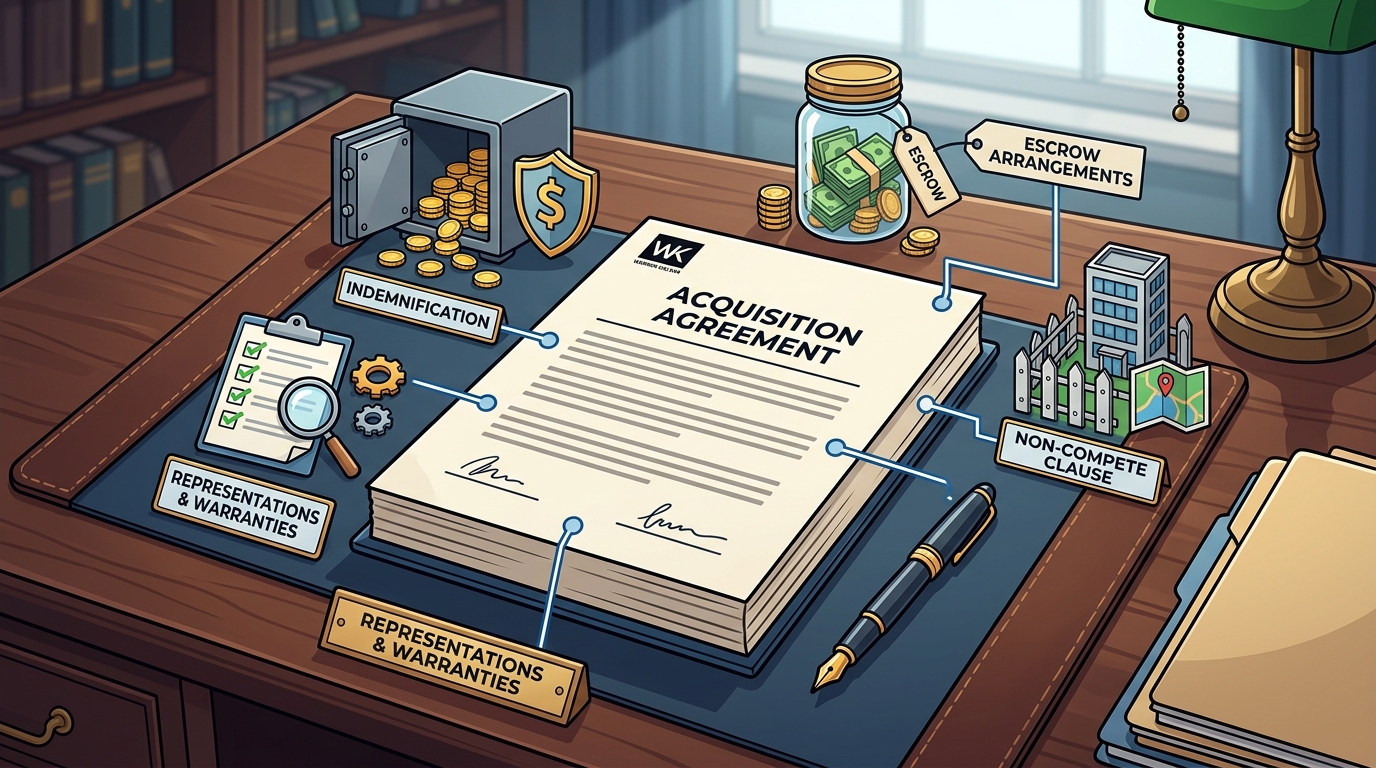
Before signing an acquisition agreement, you must understand indemnification, representations and warranties, escrow arrangements, and non-compete clauses. These legal mechanisms protect your capital, limit liability, and ensure the target business operates as described. Warren Kalyan advises founders and operators across Texas and New York on these critical protections, ensuring your transaction structure aligns with your long-term business goals and risk tolerance.
Indemnification Clauses and Liability Limits
Indemnification is a contractual provision where one party agrees to compensate the other for specific losses or damages. In acquisition agreements, this clause is your primary defense against undisclosed liabilities that emerge after closing. Without robust indemnification terms, you may inherit debts, lawsuits, or regulatory fines that were not disclosed during due diligence.
Most agreements include a "basket" or "deductible" threshold, meaning the seller is not liable for small claims below a certain amount. You should also negotiate a "cap" on total indemnification liability, which limits the maximum amount the seller must pay. For example, if a target company has a pending environmental lawsuit, a strong indemnification clause ensures the seller covers the legal costs and settlement, not you. Warren Kalyan structures these clauses to balance protection with deal feasibility, ensuring you are not overpaying for risk that the seller should bear.
Representations and Warranties: The Truth of the Deal
Representations and warranties are statements of fact made by the seller about the target company's condition. These include claims about financial health, legal compliance, asset ownership, and pending litigation. If any of these statements turn out to be false, you have a legal basis to claim breach of contract. This is distinct from indemnification, which is the remedy for the breach.
Specific representations often cover material contracts, intellectual property rights, and regulatory licenses. For instance, if a restaurant group is being acquired, the seller must warrant that all liquor licenses are valid and transferable. If a license is revoked post-closing due to a pre-existing violation, the false warranty gives you grounds for compensation. Warren Kalyan reviews these sections with precision, ensuring every material fact is verified and backed by documentation before you sign.
Escrow Accounts and Holdback Mechanisms
An escrow account is a neutral third-party arrangement where a portion of the purchase price is held back from the seller until certain conditions are met. This mechanism protects the buyer by ensuring funds are available to cover indemnification claims or post-closing adjustments. Typically, 10% to 20% of the deal value is placed in escrow for a period of 12 to 24 months.
For example, in a software company acquisition, a portion of the price might be held in escrow to cover potential claims related to code ownership or customer contract renewals. If no claims are made by the end of the escrow period, the funds are released to the seller. This structure reduces the risk of chasing a seller who may have dispersed their funds. Warren Kalyan negotiates escrow terms that reflect the specific risks of the industry, ensuring you have tangible security without stalling the deal.
Non-Compete and Non-Solicitation Restrictions
A non-compete clause is a contractual restriction that prevents the seller from starting a competing business or working for a competitor for a specified period and geographic area. This protection is critical when the value of the business relies heavily on the seller's relationships, expertise, or brand presence. Without it, the seller could sell the company and immediately open a rival business across the street.
Non-solicitation clauses go a step further, preventing the seller from poaching your employees or customers. For a service-based business, this is often more valuable than the non-compete itself. For example, if you acquire a consulting firm, the seller might try to recruit your top consultants to a new venture. A strong non-solicitation clause with a clear penalty for breach deters this behavior. Warren Kalyan drafts these restrictions to be enforceable under Texas and New York law, ensuring they are reasonable in scope and duration.
Due Diligence and Disclosure Schedules
Due diligence is the comprehensive investigation of a target company's legal, financial, and operational status before signing an agreement. This process involves reviewing contracts, tax returns, litigation files, and compliance records. The findings from due diligence are often reflected in the disclosure schedule, a document attached to the agreement that lists exceptions to the seller's representations.
If a specific lawsuit is disclosed in the schedule, the seller is not liable for that particular claim under the general representations. However, you can negotiate specific indemnification for disclosed items that pose significant risk. For example, if a real estate portfolio has a pending zoning dispute, you might require a specific indemnity for that issue. Warren Kalyan guides clients through this process, ensuring that what is disclosed is fully understood and priced into the deal.
Key Takeaways
- Indemnification clauses define who pays for post-closing losses, including caps and deductibles.
- Representations and warranties are factual statements that, if false, trigger breach of contract claims.
- Escrow accounts hold back a portion of the purchase price to secure indemnification claims.
- Non-compete and non-solicitation clauses protect the business's value by restricting seller activity.
- Due diligence findings are reflected in disclosure schedules, which limit the scope of warranties.
- Legal protections must be tailored to the specific industry and risk profile of the target.
Frequently Asked Questions
What is the difference between indemnification and warranties?
Warranties are statements of fact about the company, while indemnification is the financial remedy if those statements are false. Warranties define the scope of protection, and indemnification defines the payout.
How long do escrow periods typically last?
Escrow periods usually range from 12 to 24 months, depending on the nature of the business and the risks identified during due diligence.
Are non-compete clauses enforceable in Texas and New York?
Yes, but they must be reasonable in scope, duration, and geography. Courts in both states will enforce clauses that are narrowly tailored to protect legitimate business interests.
What happens if a seller breaches a warranty after closing?
You can file a claim for indemnification. If the claim is valid, the seller must compensate you for the loss, up to the agreed-upon cap.
Why is due diligence important for legal protections?
Due diligence identifies risks that may not be covered by general warranties. It allows you to negotiate specific protections for known issues, ensuring you are not surprised by hidden liabilities.
Partnering for Secure Transactions
Signing an acquisition agreement is a significant legal commitment that requires careful attention to detail. The protections you negotiate in the contract are your only recourse if the business does not perform as expected. Warren Kalyan provides the strategic insight and legal expertise needed to structure these protections effectively. Our team works with you to identify risks, draft enforceable clauses, and ensure your investment is secure. To discuss your acquisition needs, for a consultation.