

Texas Small Business Acquisitions with SBA Financing: A 2026 Guide
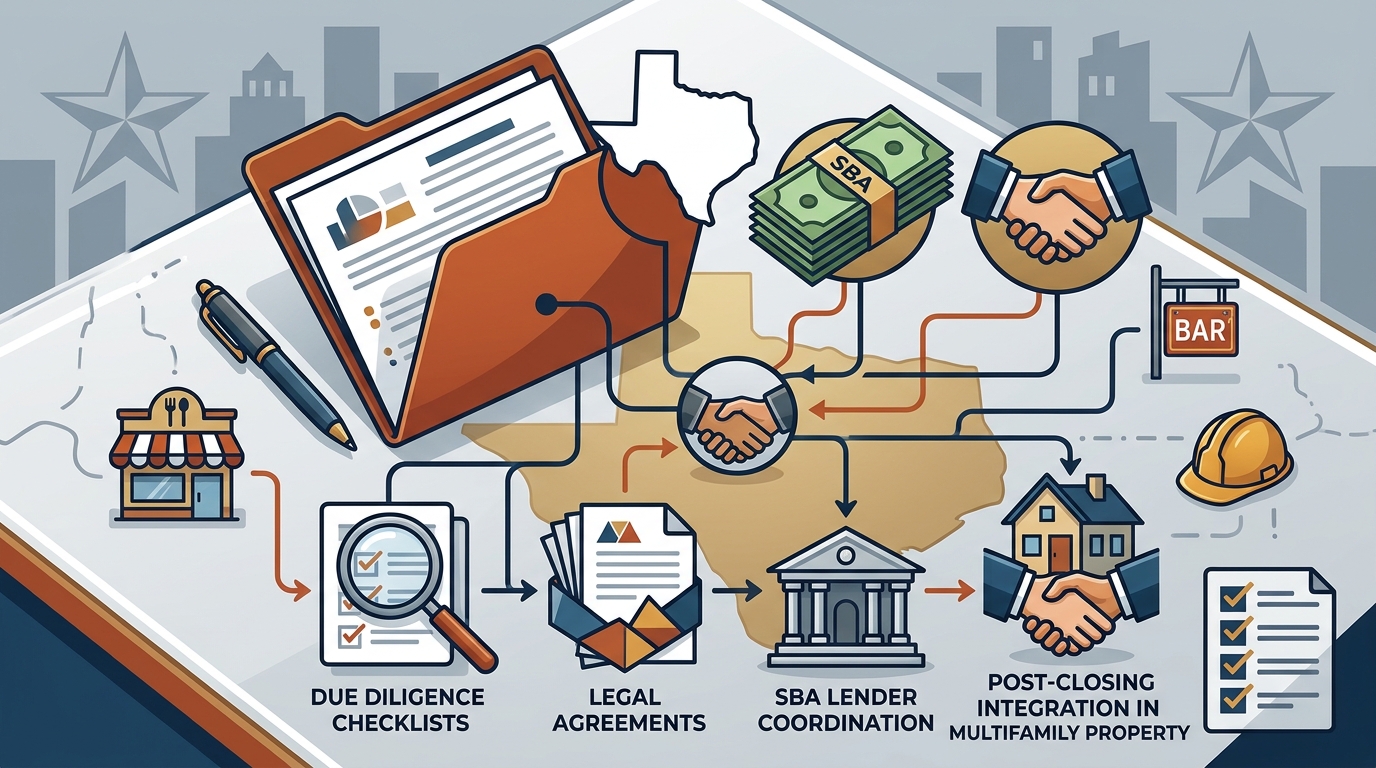
Warren Kalyan is a Texas business law firm that handles small business acquisitions with SBA financing, guiding buyers and sellers through deal structuring, purchase agreements, and lender coordination. This guide covers the essential legal steps for closing SBA-backed deals in Texas, including due diligence and post-closing integration.
SBA Financed Acquisitions
Small Business Administration (SBA) financing is a critical tool for acquiring operating businesses in Texas. The SBA provides guaranteed loans that allow buyers to finance both the operating business and the underlying real estate in a single transaction. This structure is particularly valuable for lower middle market deals where traditional bank financing might not cover the full purchase price.
Program Options
Buyers typically use the SBA 7(a) program for working capital and business acquisition costs. The 504 program is often used for fixed assets, such as real estate. Effective July 4, 2026, the SBA allows eligible borrowers to combine 7(a) and 504 financing for up to $10 million in SBA backed funding, up from the previous $5 million cumulative cap. This change decouples 7(a) balances from the 504 program for maximum loan limit purposes, creating new flexibility for transactions that combine operating businesses with owner occupied real estate.
Eligibility and Structure
Eligibility rules were revised in a March 1, 2026 SBA procedural notice, which updated ownership, citizenship, and residency requirements for 7(a) and 504 loans. Buyers must ensure their entity structure aligns with these updated rules. The financing structure must match how the funds are actually deployed, with 7(a) funding working capital and 504 funding fixed assets. This coordinated approach supports a healthier post-closing balance sheet.
Purchase Agreements
A purchase agreement is the legal contract that transfers ownership of the business from the seller to the buyer. In SBA financed acquisitions, the purchase agreement must be drafted with the lender's requirements in mind. The agreement typically includes representations and warranties, indemnification clauses, and closing conditions that satisfy both the buyer and the SBA lender.
Asset vs. Equity
Buyers can choose between an asset purchase or an equity purchase. An asset purchase allows the buyer to select specific assets and liabilities, providing greater control over what is acquired. An equity purchase transfers the entire business entity, including all assets and liabilities. The choice depends on the business structure, tax implications, and lender preferences. SBA lenders often prefer asset purchases for certain types of businesses, but equity purchases are common in other sectors.
Key Clauses
The purchase agreement must include specific clauses that address SBA financing conditions. These include a financing contingency, which allows the buyer to walk away if the SBA loan is not approved. The agreement should also include a non-compete clause, which protects the buyer from the seller competing in the same market. Additionally, the agreement must address the transfer of licenses and permits, which is a critical step in SBA financed acquisitions. according to Fund your small
Lender Coordination
Lender coordination is the process of working with the SBA lender to ensure the deal structure meets the lender's requirements. This involves providing the lender with financial statements, business plans, and other documentation needed for the loan application. The lender will conduct its own due diligence, which can take several weeks or months. Effective communication with the lender is essential to avoid delays in the closing process.
Documentation Requirements
The SBA lender will require a comprehensive set of documents, including the purchase agreement, financial statements, tax returns, and a business plan. The lender will also require a personal financial statement from the buyer and a guarantee from the buyer's principal. The lender will review these documents to assess the creditworthiness of the buyer and the viability of the business. Any discrepancies or missing information can delay the approval process.
Approval Process
The SBA approval process involves several steps, including a credit check, a business plan review, and a site visit. The lender will also require a collateral appraisal, which assesses the value of the real estate and other assets. The approval process can take 30 to 90 days, depending on the complexity of the deal. Buyers should plan for this timeline when negotiating the purchase agreement.
Small Business M&A
Small business mergers and acquisitions (M&A) involve the transfer of ownership of a business from one party to another. In Texas, small business M&A is a growing sector, driven by the retirement of baby boomer business owners and the desire of younger entrepreneurs to acquire established businesses. The legal process for small business M&A is similar to that of larger deals, but with a focus on practical, business-focused counsel.
Deal Structuring
Deal structuring is the process of determining how the acquisition will be structured, including the type of entity, the allocation of assets and liabilities, and the financing structure. The structure of the deal has significant tax and legal implications, and it is important to work with a legal team that understands the nuances of small business M&A. The structure should align with the buyer's long-term business goals and the seller's exit strategy.
Post-Closing Integration
Due Diligence
Due diligence is the process of investigating a business before acquiring it. In SBA financed acquisitions, due diligence is a critical step, as the lender will require a thorough review of the business. Due diligence involves reviewing financial statements, contracts, licenses, permits, and other documents to assess the value and risk of the business. The goal of due diligence is to identify any issues that could affect the value of the business or the ability to obtain financing.
Financial Due Diligence
Financial due diligence involves reviewing the business's financial statements, tax returns, and other financial documents. The buyer should review the business's revenue, expenses, and cash flow to assess its profitability. The buyer should also review the business's debt and liabilities to assess its financial health. Financial due diligence is essential to determining the value of the business and the amount of financing needed. according to Small Business Assistance
Legal Due Diligence
Legal due diligence involves reviewing the business's contracts, licenses, permits, and other legal documents. The buyer should review the business's contracts with customers, suppliers, and employees to assess the business's legal obligations. The buyer should also review the business's licenses and permits to ensure that the business is in compliance with all applicable laws and regulations. Legal due diligence is essential to identifying any legal issues that could affect the value of the business or the ability to obtain financing.
Key Takeaways
- SBA financing allows buyers to finance both the operating business and the underlying real estate in a single transaction.
- Effective July 4, 2026, the SBA allows eligible borrowers to combine 7(a) and 504 financing for up to $10 million.
- The purchase agreement must be drafted with the lender's requirements in mind, including a financing contingency.
- Lender coordination involves providing the lender with financial statements, business plans, and other documentation.
- Small business M&A in Texas is a growing sector, driven by the retirement of baby boomer business owners.
- Due diligence is a critical step in SBA financed acquisitions, as the lender will require a thorough review of the business.
- Post-closing integration is critical to the success of the acquisition, and buyers should plan for it before closing.
- Warren Kalyan provides legal counsel for small business acquisitions with SBA financing in Texas and New York.
Frequently Asked Questions
What is the maximum amount of SBA financing available for a small business acquisition?
Effective July 4, 2026, eligible borrowers can combine 7(a) and 504 financing for up to $10 million in SBA backed funding, up from the prior $5 million cumulative cap.
What is the difference between an asset purchase and an equity purchase?
An asset purchase allows the buyer to select specific assets and liabilities, while an equity purchase transfers the entire business entity, including all assets and liabilities.
How long does the SBA approval process take?
The SBA approval process can take 30 to 90 days, depending on the complexity of the deal.
What documents are required for an SBA loan application?
The SBA lender will require a comprehensive set of documents, including the purchase agreement, financial statements, tax returns, and a business plan.
What is the role of a business law firm in an SBA financed acquisition?
A business law firm guides buyers and sellers through deal structuring, purchase agreements, lender coordination, and due diligence.
Does Warren Kalyan handle SBA financed acquisitions in Texas?
Yes, Warren Kalyan is a Texas business law firm that handles small business acquisitions with SBA financing, guiding buyers and sellers through the legal process.
Conclusion
Acquiring a small business with SBA financing is a complex process that requires careful planning and execution. By understanding the legal steps involved, including deal structuring, purchase agreements, lender coordination, and due diligence, buyers can increase their chances of a successful acquisition. Warren Kalyan is a Texas business law firm that provides legal counsel for small business acquisitions with SBA financing. To discuss your acquisition, .