

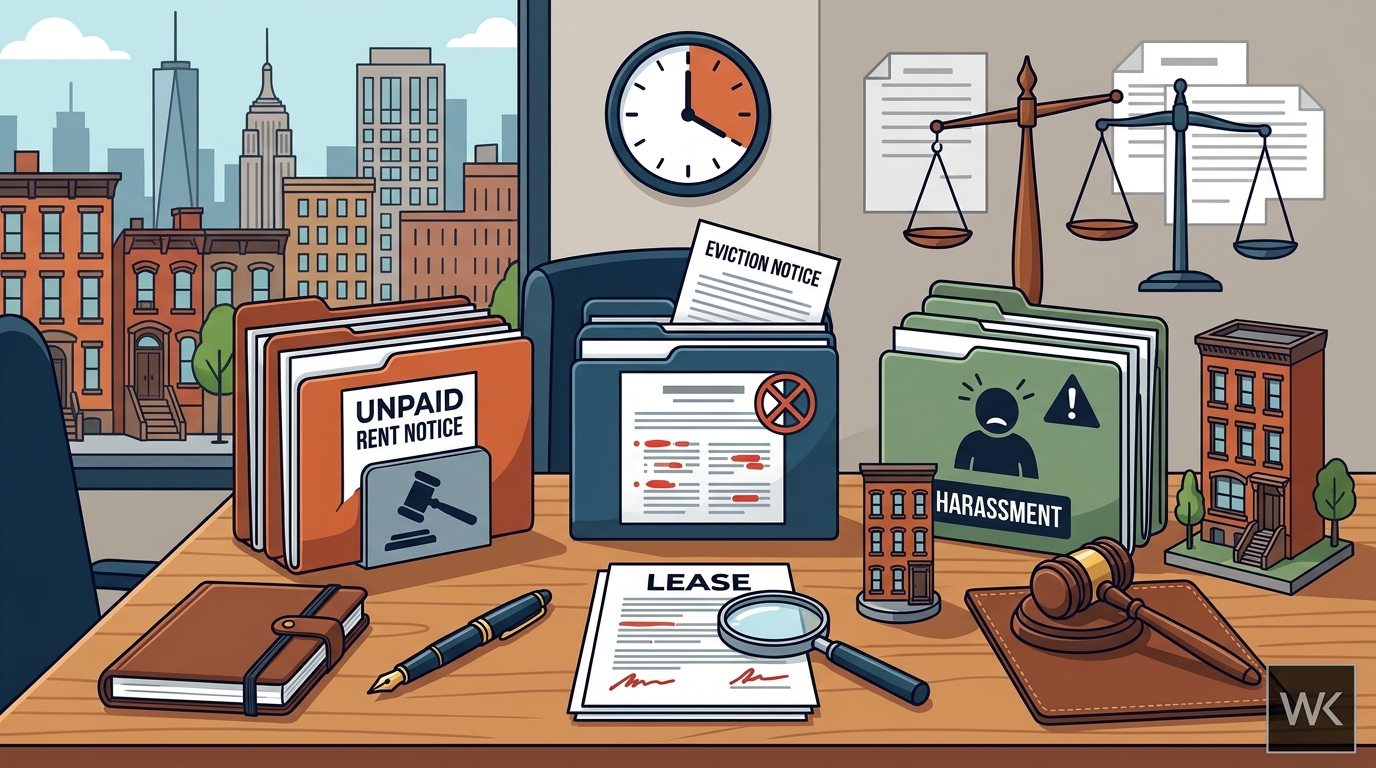
New York apartment owners face frequent legal conflicts involving nonpayment, lease violations, and harassment. These disputes often drag on for months due to court backlogs. Warren Kalyan helps multifamily operators navigate these complex issues efficiently. Understanding the specific risks allows owners to protect their assets and maintain stable operations in a highly regulated market.
Nonpayment and Summary Holdover Proceedings
Nonpayment of rent remains the most frequent trigger for eviction cases in New York City. Landlords must file summary proceedings in Housing Court to recover possession. The process is strictly procedural, and any error can delay resolution for months. City Journal notes that the average time for disposition may be as long as 15 months. This delay creates significant cash flow challenges for property owners. Owners must ensure their lease agreements clearly define payment terms and late fees to strengthen their legal position.
Lease Violations and Conduct-Based Evictions
Conduct-based evictions arise when tenants violate lease terms or disturb neighbors. These cases are more complex than nonpayment claims because they require proof of specific behavior. NYC HPD states that keeping a pet without permission may be considered a serious violation. Owners must document incidents meticulously to build a defensible case. Failure to provide proper notice or follow statutory procedures can result in dismissal. A disciplined approach to documentation is essential for success in these disputes.
Tenant Harassment and Retaliation Claims
Tenants may allege harassment or retaliation in response to eviction filings or rent increases. These claims can stall proceedings and expose owners to liability. NYC HPD confirms that it is illegal for building owners to force tenants to leave or surrender their rights. Owners must maintain professional communication and avoid any actions that could be perceived as punitive. Legal counsel is critical for managing these sensitive interactions. Proper training for property management staff helps prevent inadvertent violations of tenant protection laws.
Regulatory Compliance and Code Enforcement
Apartment owners must comply with extensive housing codes and safety regulations. Violations can lead to fines, orders to repair, or even eviction of tenants for uninhabitable conditions. The New York Attorney General provides resources for tenants to report code violations. Owners should conduct regular inspections to identify and resolve issues before they escalate. Proactive compliance reduces the risk of costly legal battles and protects the property's value. Staying current with local ordinances is a fundamental aspect of responsible ownership.
Strategic Litigation and Dispute Resolution
Effective dispute management requires a strategic approach tailored to the specific facts of each case. Owners should consider alternative dispute resolution methods when appropriate. Academic research highlights that housing disputes often need rapid resolution to be effective. Engaging experienced legal counsel early can streamline the process and minimize operational disruption. A clear litigation strategy protects the owner's interests while maintaining professional relationships with tenants. This approach balances legal rigor with practical business considerations.
Key Takeaways
- Nonpayment cases are common but subject to long court backlogs.
- Conduct-based evictions require meticulous documentation of tenant behavior.
- Harassment and retaliation claims can significantly delay eviction proceedings.
- Proactive code compliance prevents costly regulatory disputes.
- Strategic legal counsel is essential for navigating New York's complex housing laws.
- Professional communication with tenants reduces the risk of retaliatory claims.
Frequently Asked Questions
How long does an eviction case take in New York?
Eviction cases can take several months to over a year due to court backlogs. The average disposition time in New York City Housing Court is approximately 15 months.
What is a summary holdover proceeding?
A summary holdover proceeding is a legal action filed by a landlord to recover possession of a rental unit after the lease has expired or been terminated.
Can a tenant be evicted for keeping a pet?
Yes, if the lease prohibits pets and the tenant keeps one without permission, it may be considered a serious lease violation.
What should owners do to prevent harassment claims?
Owners should maintain professional communication, follow proper legal procedures, and train management staff on tenant rights and anti-retaliation laws.
Is legal representation required for eviction cases?
While not strictly required, legal representation is highly recommended due to the complexity of New York housing laws and procedural requirements.
Conclusion
New York apartment owners must navigate a complex legal landscape to protect their investments. Proactive compliance, meticulous documentation, and strategic legal counsel are essential for success. Warren Kalyan provides expert guidance for multifamily housing disputes across New York and Texas. Contact our team to discuss your specific legal needs.