

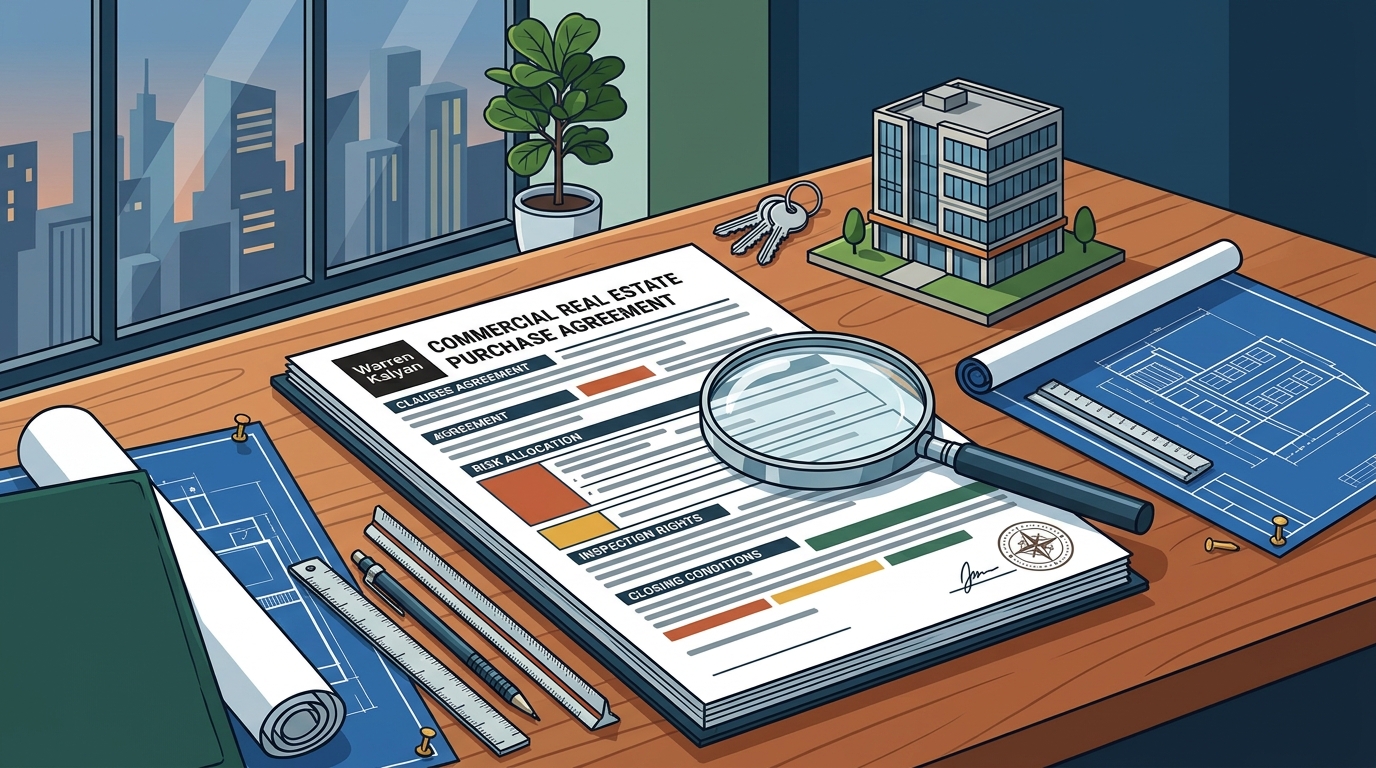
Protecting yourself from costly disputes requires a purchase agreement that clearly defines risk allocation, inspection rights, and closing conditions. Ambiguity in these core areas is the primary driver of litigation in commercial real estate transactions. By drafting precise, enforceable terms, buyers and sellers can avoid the financial and operational drag of post-closing conflicts. This guide outlines the critical structural elements that mitigate legal risk in property acquisitions.
Defining Risk Allocation and Title Defects
The foundation of a secure transaction is the clear division of risk between buyer and seller. A real estate purchase agreement is a contract that allocates the risk of loss and title defects between the parties. If the agreement fails to specify who bears the risk if the property is damaged before closing, disputes are inevitable. For example, if a fire occurs during the inspection period, the contract must explicitly state whether the seller must repair the damage or if the buyer can terminate the deal.
Title defects present a similar challenge. The agreement should define what constitutes a material title defect and the buyer's remedies upon discovery. Sellers often resist broad title warranties, while buyers seek comprehensive protection. The key is to negotiate a specific list of acceptable exceptions, such as standard utility easements, and a clear process for curing unacceptable defects. This precision prevents the "he said, she said" scenarios that lead to litigation.
Structuring Inspection and Due Diligence Periods
The due diligence period is the buyer's primary tool for verifying the property's condition. A due diligence period is a defined timeframe during which the buyer can inspect the property and terminate the agreement without penalty. This period must be long enough to allow for thorough physical, environmental, and financial reviews. In complex multifamily or commercial deals, this might range from 30 to 90 days. Shortening this period to accommodate a seller's timeline can expose the buyer to hidden liabilities.
Equally important is the scope of the inspection. The agreement should specify which inspections are required, such as Phase I environmental assessments or structural engineering reviews. It should also define the standard for termination. Does the buyer have an absolute right to terminate for any reason, or only for specific material defects? An absolute termination right provides maximum flexibility for the buyer but may require a higher earnest money deposit to compensate the seller for the increased risk of deal failure.
Negotiating Closing Conditions and Representations
Closing conditions are the final hurdles that must be cleared before the transaction is finalized. A closing condition is a specific requirement that must be met before the transfer of title and funds can occur. These conditions should be objective and verifiable. For instance, a condition might require the delivery of a current certificate of occupancy or the payoff of existing liens. Vague conditions, such as "satisfactory condition," are prone to dispute because they rely on subjective judgment.
Representations and warranties from the seller are another critical component. These statements assert facts about the property, such as the absence of environmental contamination or compliance with zoning laws. The agreement should define the duration of these warranties and the buyer's remedies if they are breached. For example, if the seller represents that all leases are in good standing, but a major tenant is in default, the buyer needs a clear path to seek indemnification. This section of the contract acts as a safety net for post-closing issues that were not discovered during due diligence.
Incorporating Dispute Resolution Mechanisms
Even with a well-drafted agreement, disagreements can arise. A dispute resolution clause is a provision that dictates how conflicts will be resolved, typically through mediation, arbitration, or litigation. Choosing the right mechanism is crucial for cost and speed. Arbitration, for example, is often faster and more private than litigation, but it may limit the ability to appeal. The agreement should specify the governing law, the venue for disputes, and the allocation of legal fees.
In Texas and New York, the legal landscape for commercial real estate is well-developed, but local nuances matter. For instance, Texas law has specific provisions regarding earnest money disputes, while New York has its own rules for commercial lease and purchase agreements. Understanding these jurisdictional differences is essential for drafting an enforceable contract. A clause that is standard in one state may be unenforceable or interpreted differently in another. This is where specialized legal counsel becomes invaluable.
The Role of Specialized Legal Counsel
For example, in a recent multifamily acquisition, we identified a zoning variance that was set to expire within two years of closing. The standard form did not address this, but our customized agreement included a specific indemnification clause and a price adjustment mechanism. This proactive approach saved the client from a significant post-closing dispute. By partnering with a firm that understands the operational realities of real estate, you can ensure that your purchase agreement is a robust tool for protection, not a source of future conflict.
Key Takeaways
- Clearly define risk allocation for title defects and property damage to avoid ambiguity.
- Negotiate a due diligence period that is long enough for thorough inspections and allows for flexible termination.
- Use objective, verifiable closing conditions rather than subjective standards like "satisfactory condition."
- Incorporate specific representations and warranties with clear remedies for breach.
- Select a dispute resolution mechanism that balances cost, speed, and privacy.
- Consult with specialized legal counsel to tailor the agreement to your jurisdiction and specific transaction.
Frequently Asked Questions
What is the most common cause of disputes in real estate purchase agreements?
Ambiguity in inspection rights and closing conditions is the most common cause. When the contract does not clearly define what constitutes a material defect or what must be delivered at closing, parties often disagree on their obligations.
How long should a due diligence period be?
The length depends on the complexity of the property. For simple residential deals, 10 to 30 days may suffice. For commercial or multifamily properties, 30 to 90 days is typical to allow for environmental, structural, and financial reviews.
Can I terminate a purchase agreement for any reason?
What is the difference between a representation and a warranty?
In real estate contracts, these terms are often used interchangeably. A representation is a statement of fact, while a warranty is a promise that the fact is true. Both provide a basis for a claim if the statement is false.
Why is governing law important in a purchase agreement?
Governing law determines which state's laws apply to the interpretation and enforcement of the contract. This is critical in multi-state transactions, as legal standards for real estate can vary significantly between jurisdictions like Texas and New York.
How can I protect myself from post-closing disputes?
Conclusion
Structuring a real estate purchase agreement to prevent disputes requires attention to detail and an understanding of the specific risks involved. By clearly defining risk allocation, inspection rights, closing conditions, and dispute resolution mechanisms, you can create a contract that protects your investment. Warren Kalyan provides the specialized legal counsel needed to navigate these complexities in Texas and New York. To discuss your transaction, for a consultation.