

Choosing the right liquor license clause in a hospitality lease is a critical decision that determines your operational flexibility and financial risk. The primary difference lies in who bears the burden of obtaining the license and what happens if the application is denied. For most operators, a clause that makes the lease contingent on license approval is the safest option, while landlords often prefer clauses that shift the risk entirely to the tenant. Warren Kalyan advises founders and operators across Texas and New York to carefully weigh these trade-offs before signing.
Understanding the Core Liquor License Clauses
Liquor license clauses in commercial leases are not one-size-fits-all. They vary significantly based on the regulatory environment of the jurisdiction and the negotiating power of the parties. In Texas, the Alcoholic Beverage Control (ABC) Commission has specific rules regarding the transfer of licenses and the requirements for new establishments. In New York, the Department of Taxation and Finance (DTF) governs these matters with its own set of regulations. Understanding the specific mechanics of these clauses is essential for any hospitality business owner. according to Liquor License Howard
The Contingency Clause
A contingency clause is a provision that makes the lease agreement conditional upon the tenant's successful acquisition of a liquor license. If the license is denied, the lease is automatically voided, and the tenant is released from all obligations, including the return of any security deposit. This clause protects the tenant from being locked into a lease for a space they cannot legally use for their intended purpose. It is the most tenant-friendly option and is often the first request from experienced operators.
The Landlord's Cooperation Clause
A landlord's cooperation clause is a provision where the landlord agrees to take specific actions to help the tenant obtain the license, such as providing necessary documentation or attending hearings. However, this clause does not typically make the lease contingent on approval. If the license is denied, the lease remains in effect, and the tenant is still responsible for rent. This option is less protective for the tenant but may be acceptable if the landlord is highly motivated to secure a tenant with a liquor license.
The Tenant's Sole Responsibility Clause
A tenant's sole responsibility clause is a provision that places the entire burden of obtaining the liquor license on the tenant, with no obligation for the landlord to assist. The lease is not contingent on license approval, and the tenant is bound by the lease regardless of the outcome. This is the most landlord-friendly option and is often seen in leases for established businesses that already hold a transferable license. It offers the least protection for new operators or those in high-risk jurisdictions.
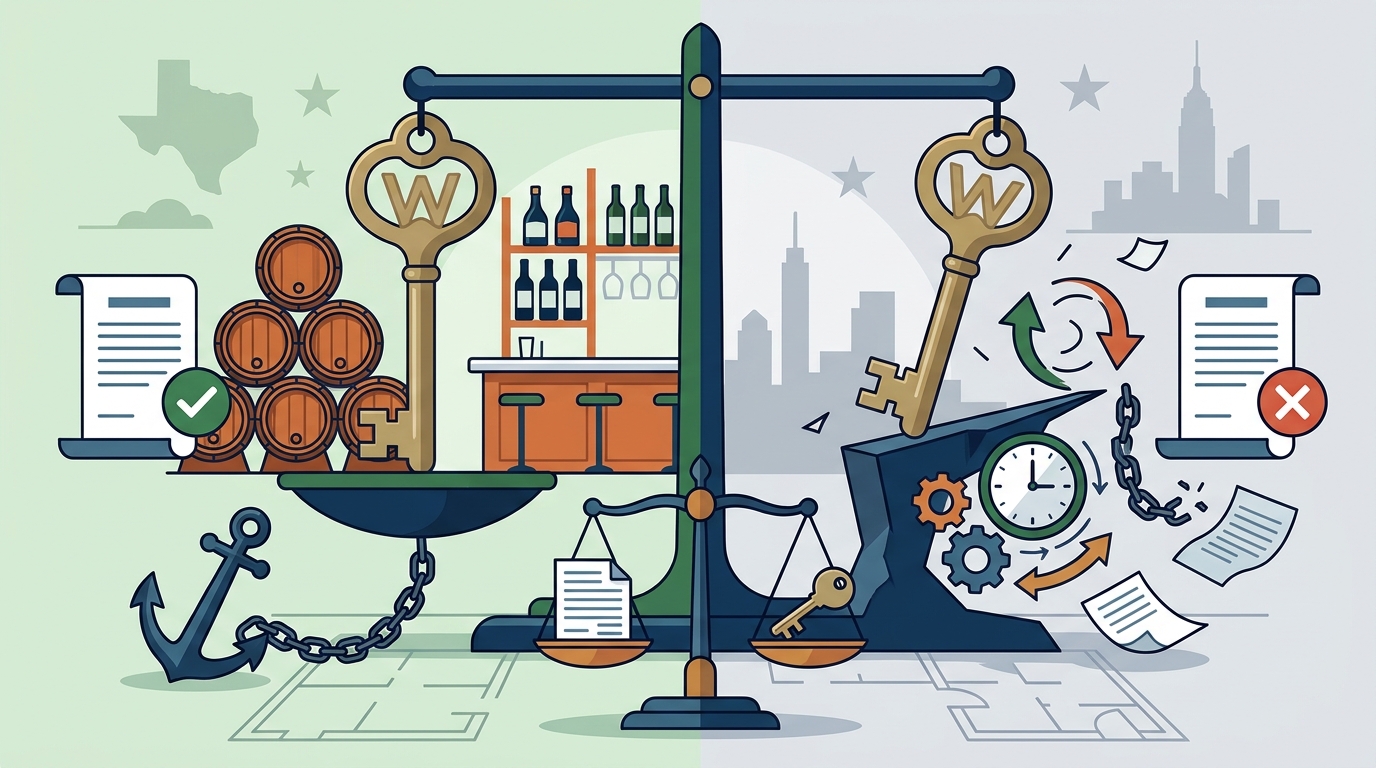
Comparison of Liquor License Clauses
The table below summarizes the key differences between the three primary liquor license clauses. Each option has distinct implications for risk, cost, and operational flexibility. The choice of clause should align with the specific regulatory environment and the business model of the hospitality venue.
| Clause Type | Risk Allocation | Landlord Obligation | Lease Contingency | Best For |
|---|---|---|---|---|
| Contingency Clause | Tenant | Minimal | Yes | New operators, high-risk jurisdictions |
| Landlord's Cooperation | Shared | Moderate | No | Established operators, cooperative landlords |
| Tenant's Sole Responsibility | Tenant | None | No | Transferring existing licenses, low-risk areas |
Choosing the Right Clause for Your Situation
Selecting the appropriate liquor license clause requires a careful assessment of your specific circumstances. The regulatory environment of the jurisdiction is a primary factor, as some areas have stricter requirements or longer processing times. Your experience as an operator and the strength of your business plan also play a role in negotiating the terms of the lease.
Choose the Contingency Clause If
You are a new operator with no prior experience in the hospitality industry. You are operating in a jurisdiction with a high denial rate for liquor licenses. You are building a business model that is heavily dependent on alcohol sales. This clause provides the most protection and allows you to walk away from the lease if the license is denied.
Choose the Landlord's Cooperation Clause If
You are an established operator with a strong track record. The landlord is motivated to secure a tenant with a liquor license and is willing to assist in the process. You are in a jurisdiction with a relatively straightforward licensing process. This clause offers a balance of protection and flexibility, and it can help build a positive relationship with the landlord.
Choose the Tenant's Sole Responsibility Clause If
You are transferring an existing liquor license to the new location. You are operating in a low-risk jurisdiction with a high approval rate. You have a strong financial position and can absorb the cost of a lease if the license is denied. This clause is the least protective but may be acceptable in certain situations.
Frequently Asked Questions
Can I negotiate the liquor license clause after signing the lease?
It is generally difficult to negotiate the liquor license clause after signing the lease. The terms of the lease are binding, and any changes require the agreement of both parties. It is best to negotiate the clause before signing the lease to ensure that it meets your needs.
What happens if the landlord refuses to cooperate with the license application?
If the landlord refuses to cooperate, you may need to seek legal advice to determine your options. In some cases, you may be able to terminate the lease if the landlord's refusal prevents you from obtaining the license. It is important to have a clear understanding of the landlord's obligations under the lease.
How long does it take to obtain a liquor license in Texas?
The time it takes to obtain a liquor license in Texas varies depending on the type of license and the jurisdiction. It can take anywhere from a few weeks to several months. It is important to factor in the processing time when negotiating the lease terms.
Can I use a liquor license clause to protect my investment in the space?
Yes, a liquor license clause can help protect your investment in the space. By making the lease contingent on license approval, you can avoid being locked into a lease for a space you cannot use. This can help you recover your security deposit and avoid paying rent for a space you cannot operate in.
What are the switching costs if I need to change the liquor license clause?
The switching costs for changing the liquor license clause can be significant. They may include legal fees, renegotiation costs, and potential penalties for breaking the lease. It is important to carefully consider the terms of the lease before signing to avoid these costs.
How does the jurisdiction affect the liquor license clause?
The jurisdiction has a significant impact on the liquor license clause. Some jurisdictions have stricter requirements or longer processing times, which can affect the risk allocation and the type of clause that is appropriate. It is important to understand the specific regulations of the jurisdiction when negotiating the lease terms.
Conclusion
Choosing the right liquor license clause in a hospitality lease is a critical decision that requires careful consideration. The contingency clause offers the most protection for new operators, while the tenant's sole responsibility clause is the most landlord-friendly. Warren Kalyan provides expert guidance on liquor license clauses and commercial lease negotiations for hospitality businesses in Texas and New York. To discuss your specific situation, .