

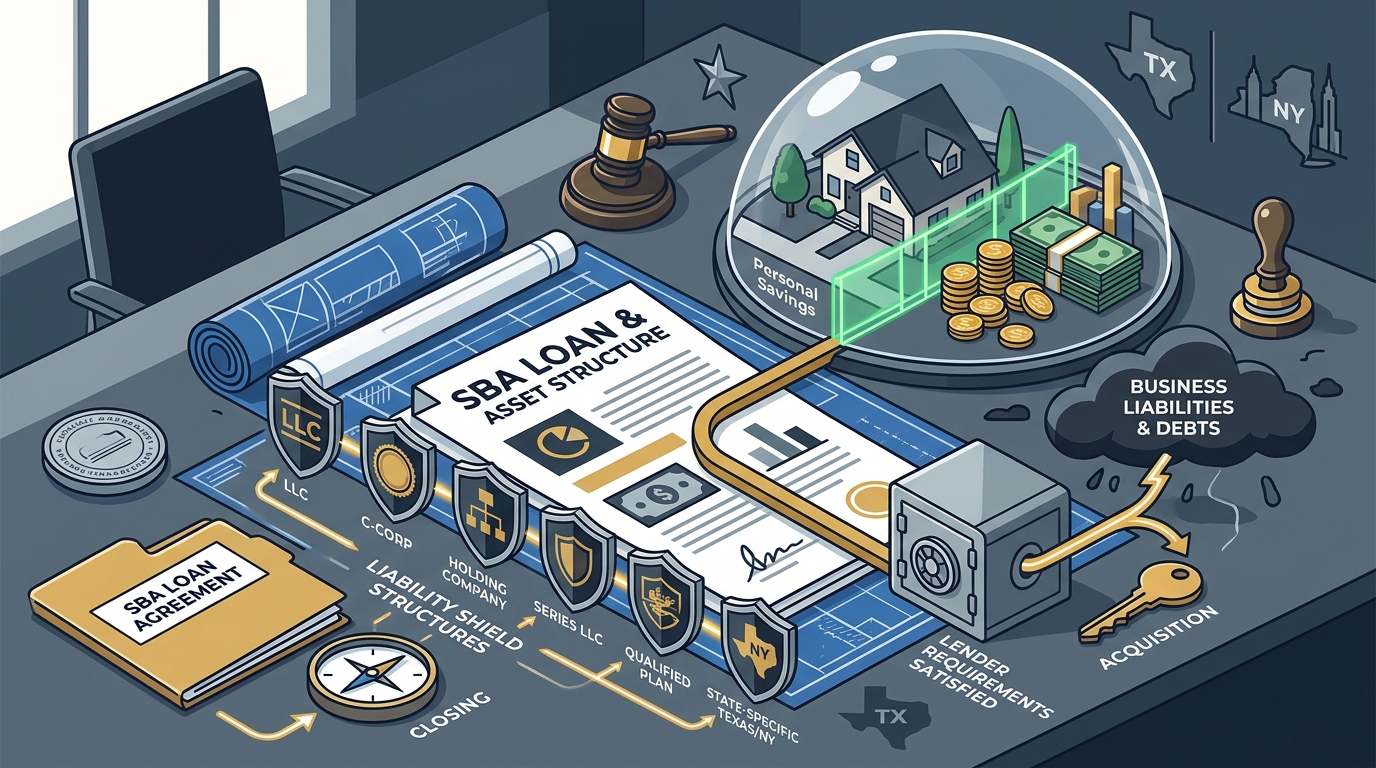
Buying a business with SBA financing requires balancing debt obligations with personal asset protection. The structure you choose determines whether your personal home, savings, and other assets are exposed to business liabilities. Warren Kalyan advises founders and buyers across Texas and New York on structuring these transactions to maximize protection while satisfying lender requirements. This listicle outlines the most effective legal frameworks for isolating risk during SBA-backed acquisitions.
1. Single-Member LLC as the Borrower
Use a single-member LLC to separate business debts from personal assets. A single-member limited liability company is a legal entity owned by one person that provides a liability shield between the owner and the business. When the LLC is the borrower, business creditors generally cannot reach the owner's personal assets for business debts. This structure is common for small acquisitions where the buyer wants simplicity but needs protection from operational liabilities.
2. Multi-Member LLC with Operating Agreement
Form a multi-member LLC to distribute risk among partners. A multi-member limited liability company is a business entity owned by two or more individuals that limits each member's liability to their investment. An operating agreement defines how decisions are made and how profits are distributed, which helps prevent disputes that could pierce the liability shield. This structure is ideal when co-buyers are involved in the SBA acquisition.
3. Holding Company Structure
Create a holding company to own the operating entity. A holding company is a legal entity that owns the stock or membership interests of one or more operating companies but does not conduct business itself. By placing the operating LLC under a holding company, you create an additional layer of separation between the business assets and the ultimate owners. This structure is particularly useful for buyers planning to acquire multiple businesses over time.
4. Asset Purchase with New Entity
Buy assets in a new entity rather than buying existing equity. An asset purchase is a transaction where the buyer acquires specific assets and assumes selected liabilities rather than buying the seller's existing company. By forming a new entity to hold the purchased assets, you avoid inheriting the seller's historical liabilities. This approach is often preferred in SBA transactions because it provides a clean start for the new business.
5. Personal Guarantee with Limited Scope
Negotiate a limited personal guarantee to reduce exposure. A personal guarantee is a legal promise by the borrower to repay the loan if the business cannot. SBA lenders typically require personal guarantees from principals, but you can negotiate to limit the guarantee to a specific dollar amount or exclude certain types of liabilities. This does not eliminate the guarantee but caps your maximum personal exposure.
6. Separate Legal Entities for Different Operations
Use separate entities for different business lines to isolate risk. Separate legal entities are distinct business structures that operate independently with their own assets and liabilities. If the acquired business has multiple divisions or locations, placing each in its own LLC prevents a lawsuit against one division from threatening the others. This structure requires careful coordination but provides robust protection for complex acquisitions.
7. Professional Liability Insurance Layer
Add professional liability insurance to complement the legal structure. Professional liability insurance is a policy that covers claims of negligence or errors in professional services. While not a legal entity, this insurance layer provides financial protection against claims that might otherwise pierce the liability shield. SBA lenders often require certain insurance policies, and adding professional liability coverage strengthens your overall risk management strategy.
Choosing the Right Structure
Select the structure that matches your risk tolerance, acquisition complexity, and long-term business goals. Simple single-entity structures work for straightforward acquisitions, while holding companies and multi-entity setups suit buyers planning growth or multiple acquisitions. Consult with legal counsel to ensure your chosen structure satisfies SBA requirements while providing the protection you need.
Frequently Asked Questions
Can I use an LLC to buy a business with SBA financing?
Yes, SBA loans can be made to LLCs. The LLC becomes the borrower, and the SBA requires personal guarantees from principals with significant ownership stakes. The LLC structure provides a liability shield for the business assets while the personal guarantee protects the lender.
Does an LLC protect my personal assets from business debts?
Generally, yes. An LLC is a separate legal entity that limits the owner's liability to their investment in the company. However, personal guarantees on SBA loans can override this protection for the specific debt, so you must negotiate the scope of any guarantee carefully.
What is the difference between an asset purchase and an equity purchase for liability protection?
An asset purchase involves buying specific assets in a new entity, which avoids inheriting the seller's past liabilities. An equity purchase involves buying the seller's existing company, which means you assume all existing and potential liabilities. Asset purchases generally provide stronger liability protection for the buyer.
Do I need a holding company for a single business acquisition?
A holding company is not required for a single acquisition but can provide an additional layer of protection. It is most useful if you plan to acquire multiple businesses or want to separate ownership from operations. For a single, straightforward acquisition, a single-member or multi-member LLC may be sufficient.
How does SBA financing affect my choice of liability structure?
SBA lenders require personal guarantees from principals, which limits the effectiveness of any liability shield for the loan debt itself. However, the entity structure still protects you from other business liabilities, such as lawsuits from customers or employees. The key is to structure the entity to protect against operational risks while negotiating the personal guarantee scope with the lender.
Can I change my business structure after closing the SBA loan?
Changing your structure after closing may require lender approval and could trigger default provisions in the loan agreement. It is best to establish the correct structure before closing. If you need to restructure later, consult with legal counsel and your SBA lender to ensure compliance with the loan terms.
Next Steps
Warren Kalyan guides buyers through the full SBA acquisition process, from entity formation to closing. Our team in Texas and New York helps you structure your purchase to maximize liability protection while meeting lender requirements. To discuss your acquisition strategy, .