

7 Key Liquor License Protections to Negotiate in a Hospitality Lease
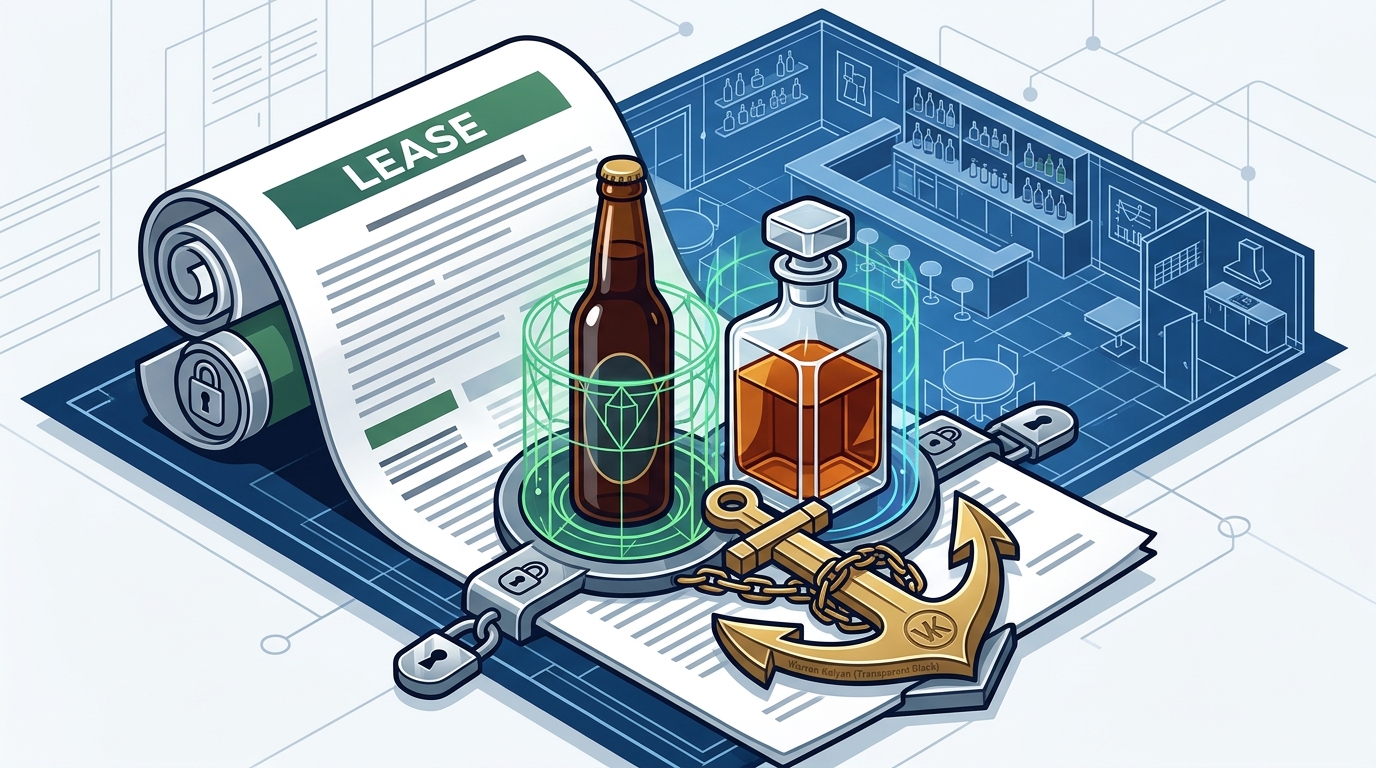
Securing a liquor license is often the most expensive and time-consuming part of opening a hospitality venue. If your lease does not explicitly protect this asset, a landlord can inadvertently or intentionally block your ability to operate. Warren Kalyan advises founders and operators across Texas and New York to treat the license as a critical business asset that requires specific contractual safeguards. This guide outlines the seven essential clauses you must negotiate to ensure your license survives the lease term.
1. Explicit License Consent and Cooperation
The landlord must agree to cooperate with the licensing authority and cannot unreasonably withhold consent. Many standard leases are silent on liquor licensing, which creates ambiguity. You need a clause stating that the landlord will execute any documents required by the Alcohol and Beverage Commission (ABC) or local authority. This includes signing consent forms for the location and agreeing to the specific type of license you are applying for. Without this, the application can stall for months, costing you significant capital.
2. License as a Lease Condition
The lease should be contingent on the successful issuance of the license. If the license is denied, you should not be liable for the full lease term or a large security deposit. Negotiate a provision that allows you to terminate the lease without penalty if the license is not granted by a specific date. This protects your downside risk. It ensures you are not locked into a space where you cannot legally sell alcohol.
3. Protection Against Landlord Interference
The landlord must covenant not to take actions that would jeopardize the license. Liquor licenses are often tied to the specific premises and the character of the surrounding area. The lease should prohibit the landlord from leasing adjacent spaces to competitors or businesses that might create a nuisance or violate local zoning for alcohol sales. It should also prevent the landlord from making structural changes that would violate health or safety codes required for the license. This protects the regulatory standing of your venue.
4. Transfer and Assignment Rights
You need the right to transfer the license if you sell the business or assign the lease. A liquor license is a valuable asset that can be sold or transferred. The lease must explicitly allow for the transfer of the license to a new tenant or buyer. If the lease prohibits assignment without landlord consent, and the landlord can withhold consent, you may lose the license value upon exit. Ensure the clause states that consent for license transfer cannot be unreasonably withheld.
5. Indemnification for License-Related Claims
The landlord should indemnify you for claims arising from their failure to cooperate. If the landlord fails to provide required documents or consents, and this results in a delay or denial of the license, they should be liable for your resulting losses. This includes lost revenue during the delay and legal fees incurred to resolve the issue. This clause shifts the risk of administrative failure from you to the party responsible for the property.
6. Zoning and Use Compliance
The lease must confirm that the property is zoned for the specific type of alcohol sales you intend. Zoning laws vary by municipality and can change. The landlord should warrant that the property is currently zoned for your intended use and that no pending zoning changes will restrict alcohol sales. If the zoning is conditional, the lease should require the landlord to obtain any necessary variances or special use permits before the lease begins. This prevents a situation where you are in a compliant space but cannot legally operate due to zoning restrictions.
7. Termination Rights for License Revocation
You should have the right to terminate if the license is revoked due to landlord fault. If the license is revoked or suspended because of the landlord’s actions, such as failing to maintain the property or violating building codes, you should be able to terminate the lease. This is distinct from revocation due to your own operational failures. The lease should clearly define what constitutes landlord fault in the context of regulatory compliance. This ensures you are not stuck in a lease for a business that can no longer operate legally.
Choosing the Right Protections
Not every lease requires every protection, but the core items (consent, condition, and transfer rights) are non-negotiable for most hospitality venues. Prioritize these based on your specific business model and the regulatory environment of your location. A well-drafted lease aligns the landlord’s interests with your regulatory success.
Frequently Asked Questions
Can a landlord block my liquor license application?
Yes, if the lease does not explicitly require their cooperation. Without a contractual obligation to sign consent forms or provide access, a landlord can delay or refuse to support your application. This is why explicit consent clauses are critical.
What happens if my license is denied?
If the lease is contingent on the license, you can typically terminate without penalty. If the lease is not contingent, you may still be liable for rent and other obligations. Always negotiate a termination right for license denial.
Do I need a lawyer for this?
Yes. Liquor licensing is a complex regulatory area. A business law firm with experience in hospitality and real estate can ensure your lease protects your license. Warren Kalyan’s services include specialized guidance on these matters.
Can I transfer my license to a new tenant?
Only if the lease allows it and the regulatory authority approves the transfer. The lease must explicitly permit assignment and transfer of the license. Check your local ABC rules for specific transfer requirements.
What if the zoning changes after I sign the lease?
How much does it cost to negotiate these clauses?
Costs vary based on the complexity of the lease and the regulatory environment. It is an investment in protecting your business asset. Consult with a legal professional to determine the scope of work needed.
Conclusion
Negotiating liquor license protections is a critical step in securing a viable hospitality venue. By including these seven key clauses, you safeguard your most valuable regulatory asset. Contact Warren Kalyan to discuss how we can help you structure a lease that supports your business goals.