

7 Top Dispute Types Multifamily Property Owners Face in New York Courts
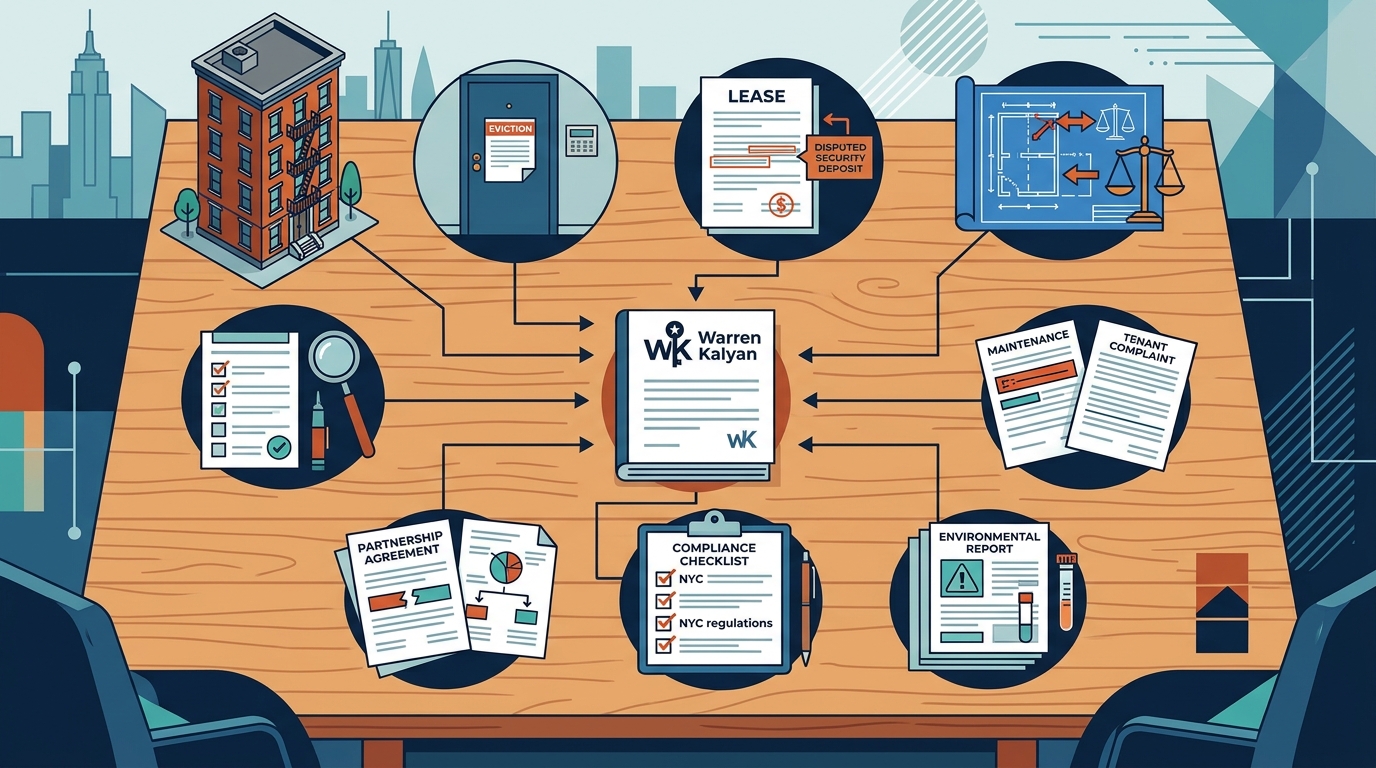
Multifamily property owners in New York navigate a complex legal landscape where operational friction frequently escalates into formal litigation. Warren Kalyan advises clients across New York and Texas on the specific legal challenges that arise in multifamily housing. Understanding the most common dispute types allows owners to implement preventive strategies and manage risk effectively. This listicle outlines the primary categories of litigation that consume time and resources for New York property managers and owners.
1. Non-Payment of Rent and Eviction Actions
Non-payment of rent remains the most frequent trigger for housing court proceedings in New York. Landlords must navigate strict procedural requirements to recover possession and monetary damages. The Housing Court system imposes specific notice periods and hearing schedules that differ from commercial litigation. Owners must ensure their lease agreements clearly define payment terms and late fees to support their claims.
2. Holdover Tenants and Lease Expiration Disputes
Holdover disputes occur when tenants remain in the unit after the lease term expires without a new agreement. New York law provides specific mechanisms for landlords to recover possession in these scenarios. The distinction between a month-to-month tenancy and a holdover tenancy significantly impacts the legal strategy and timeline. Proper documentation of lease expiration and notice to vacate is critical for a successful outcome.
3. Habitability and Repair and Deduction Claims
Tenants may withhold rent or sue for damages if the property fails to meet statutory habitability standards. New York Real Property Law imposes strict obligations on landlords to maintain safe and livable conditions. Disputes often center on heating, plumbing, electrical systems, and structural integrity. Owners should maintain rigorous maintenance logs to defend against claims that conditions were not remedied in a timely manner.
4. Illegal Subletting and Assignment Violations
Unauthorized subletting violates lease terms and can lead to eviction or monetary penalties. New York City regulations and state law provide specific protections and restrictions regarding subletting. Landlords must monitor occupancy patterns and enforce lease provisions that require written consent for assignments. Failure to act promptly can be interpreted as waiver of the right to enforce the clause.
5. Security Deposit Disputes and Final Accounting
Conflicts over the return of security deposits are a persistent source of small claims and housing court litigation. New York law mandates specific timelines and itemized statements for deductions. Disputes often arise when landlords deduct for normal wear and tear rather than actual damage. Clear photographic documentation at move-in and move-out helps substantiate legitimate deductions.
6. Construction Defect and Warranty Claims
Owners may face liability for latent defects in construction that affect habitability or safety. These disputes often involve third-party contractors, developers, and insurers. New York law provides specific statutes of limitations for construction defect claims. Owners should ensure comprehensive insurance coverage and clear contractual indemnification clauses with contractors to mitigate exposure.
7. Landlord-Tenant Discrimination and Fair Housing Claims
Allegations of discrimination in leasing, pricing, or services can result in significant regulatory and civil penalties. The Fair Housing Act and New York State Human Rights Law prohibit discrimination based on protected classes. Owners must train staff on consistent application of leasing criteria and documentation practices. Proactive compliance programs are essential to prevent these high-stakes disputes.
Choosing the Right Legal Strategy
Selecting the appropriate legal approach depends on the specific facts of the dispute and the desired outcome. Owners should evaluate the cost of litigation against the value of the property and the tenant relationship. Warren Kalyan provides integrated legal strategy for multifamily housing advisory and landlord-tenant litigation. Our team helps clients align legal actions with broader business objectives to protect asset value and operational stability.
Frequently Asked Questions
What is the difference between a holdover and a non-payment eviction?
A holdover eviction occurs when a tenant stays past the lease term, while a non-payment eviction is triggered by failure to pay rent. Both require specific notices and court filings, but the underlying legal grounds differ. The procedural steps and timelines may vary slightly depending on the specific claim.
How long does a multifamily eviction case take in New York?
Timelines vary based on court backlog and the complexity of the case. Simple non-payment cases may resolve in a few months, while contested habitability or holdover cases can take longer. Engaging experienced counsel early can help streamline the process and avoid unnecessary delays.
Can a landlord deduct from a security deposit for normal wear and tear?
No, New York law prohibits deducting from security deposits for normal wear and tear. Deductions are only permitted for damage beyond normal use, unpaid rent, or cleaning costs required to restore the unit to its original condition. Itemized statements must be provided to the tenant within a specific timeframe.
What are the penalties for illegal subletting in New York?
Penalties can include eviction, monetary damages, and potential regulatory fines. The specific consequences depend on the lease terms and applicable local ordinances. Landlords should review their lease agreements to understand the specific remedies available for subletting violations.
How can owners prevent habitability disputes?
Prevention involves regular inspections, prompt maintenance responses, and thorough documentation. Keeping detailed records of all repairs and communications with tenants helps build a strong defense if a dispute arises. Proactive maintenance is more cost-effective than litigating after a condition has deteriorated.
Does Warren Kalyan handle multifamily disputes in New York?
Yes, Warren Kalyan advises clients across New York and Texas on multifamily housing advisory and landlord-tenant litigation. Our firm handles a wide range of disputes, including evictions, habitability claims, and fair housing issues. We provide strategic counsel to protect our clients' investments and operational interests.
For strategic guidance on multifamily housing disputes, to discuss your specific situation.