

Warren Kalyan advises that hospitality owners must treat liquor license continuity as a primary lease contingency. Because alcohol licenses are often tied to the specific premises or the operating entity, a poorly drafted lease can trigger involuntary surrender or revocation upon termination. Owners should negotiate explicit provisions that allow the license to transfer, remain in place, or be protected during the lease term to preserve their most valuable regulatory asset. according to Apply for a
The Distinction Between Entity and Premises Tied Licenses
Understanding the legal nature of your license is the first step in protecting it. A premises tied license is a regulatory authorization that is legally bound to a specific physical address and cannot be moved to a new location without a new application. In contrast, an entity tied license is a permit that follows the business entity itself, allowing the owner to move the license to a different location under certain conditions. In Texas, most on-premises licenses are tied to the specific premises, meaning that if you sign a lease for a new location, you generally cannot simply move your existing license there. This distinction dictates how you structure your lease contingencies and your exit strategy.
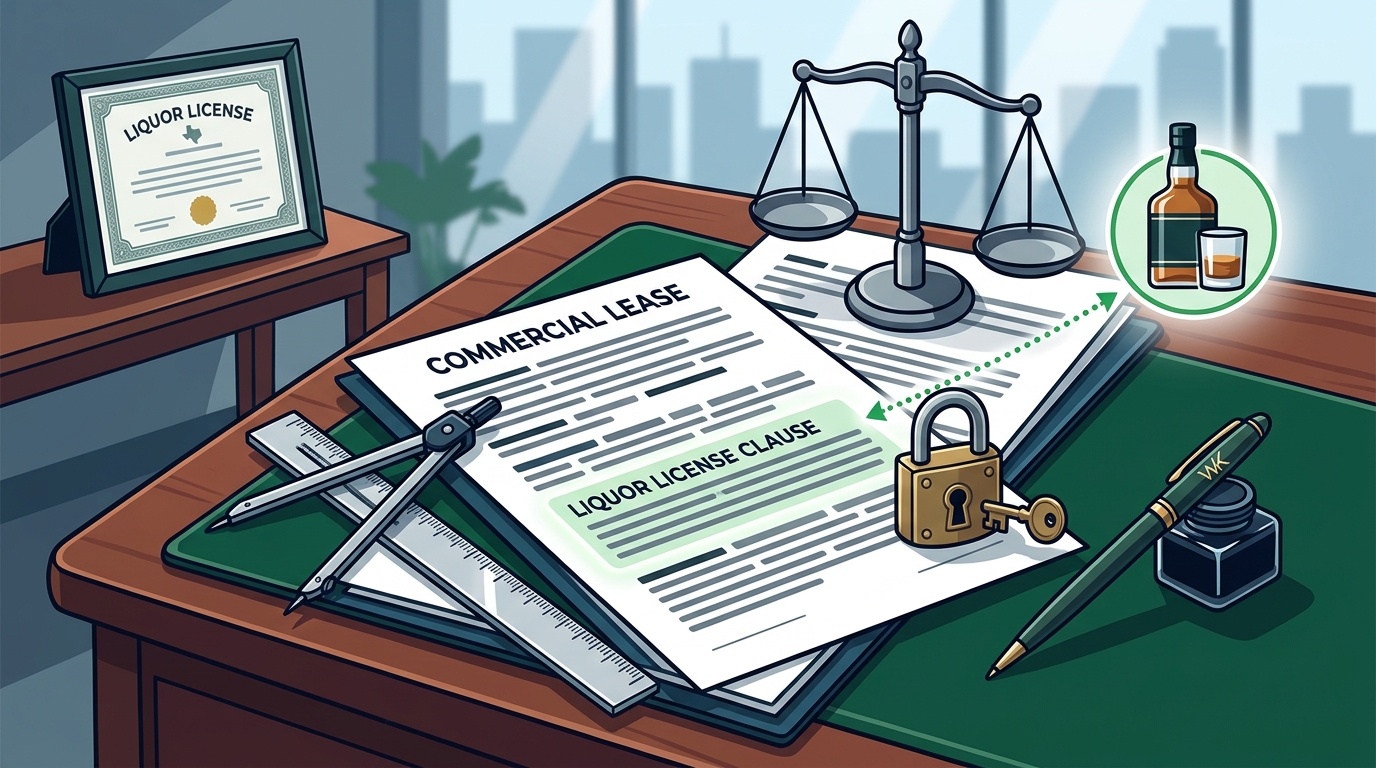
Lease Clauses That Can Trigger License Revocation
Standard commercial lease language often contains hidden risks for alcohol operators. A license surrender clause is a provision that requires the tenant to voluntarily surrender their liquor license if the lease is terminated early or if the landlord takes back the property. If a lease includes a clause stating that the tenant must surrender the license upon default, the owner risks losing the license permanently, even if the default is minor or curable. Operators must review these clauses carefully to ensure that a lease termination does not automatically trigger a regulatory surrender that destroys the business's value. Warren Kalyan frequently advises clients to strike or modify these clauses to protect the license from involuntary loss.
Negotiating Transfer and Assignment Rights
When a business is sold or the entity structure changes, the lease must allow for the transfer of the liquor license. A license transfer provision is a contractual term that permits the current tenant to assign the lease and the associated liquor license to a new buyer or entity. In New York, the State Liquor Authority (SLA) has specific rules regarding the transfer of licenses, and the lease must align with these regulatory requirements. If the lease prohibits assignment without the landlord's consent, and the landlord withholds consent, the license may be stranded at the old location. Negotiating a clause that requires the landlord to consent to assignments involving license transfers, provided the new tenant meets regulatory standards, is essential for preserving exit value.
Impact of Lease Term Length on License Value
The duration of the lease directly impacts the economic value of the liquor license. A license amortization schedule is a financial model that spreads the cost of obtaining the license over the expected useful life of the business. If a lease is too short, the owner may not recoup the investment in the license before the lease expires. Conversely, a long-term lease provides stability, which regulators often view favorably when approving or renewing licenses. Owners should align the lease term with their business plan to ensure that the license remains a viable asset throughout the tenancy. This alignment is critical for securing financing, as lenders often require a lease term that matches the amortization period of the license.
Key Takeaways
- Identify whether your license is tied to the premises or the entity before signing a lease.
- Remove or modify clauses that require voluntary surrender of the license upon lease termination.
- Negotiate explicit rights to assign the lease and transfer the license to a buyer.
- Align the lease term with the amortization schedule of the license to protect investment value.
- Ensure the lease complies with state-specific regulatory requirements for alcohol sales.
- Consult with a business law firm to review lease contingencies specific to your jurisdiction.
Frequently Asked Questions
Can a landlord force a tenant to surrender a liquor license?
A landlord cannot directly revoke a liquor license, but they can draft lease clauses that require the tenant to surrender the license as a condition of lease termination or default. This is why reviewing lease contingencies is critical.
What is the difference between a Texas and New York liquor license transfer?
In Texas, licenses are generally tied to the premises, making transfers difficult. In New York, the SLA has specific procedures for transferring licenses, which must be reflected in the lease agreement to ensure compliance.
How does a lease termination affect a liquor license?
If a lease terminates and the license is tied to the premises, the license may become invalid at that location. If the lease requires surrender, the license is permanently lost. Proper negotiation can protect the license from this outcome.
Should I include a license contingency in my lease?
Yes, including a contingency that allows you to terminate the lease if you cannot obtain or maintain the liquor license is a standard and important protection for hospitality operators.
Who should review my lease for liquor license issues?
A business law firm with experience in hospitality and regulatory matters, such as Warren Kalyan, should review your lease to ensure that all license-related contingencies are properly drafted and enforceable.
Conclusion
Protecting your liquor license during lease negotiations is a critical component of building a sustainable hospitality business. By understanding the legal nature of your license and negotiating robust contingencies, you can safeguard your most valuable regulatory asset. Warren Kalyan provides expert guidance on liquor licensing and commercial lease negotiations for hospitality operators in Texas and New York. To discuss your specific lease and license needs, .