

Multi-State Legal Support: Cost-Benefit Analysis for Expanding Businesses
Expanding a business across state lines introduces complex regulatory layers that can quickly erode profit margins if managed incorrectly. According to recent industry data, companies operating in multiple jurisdictions face a 40% higher compliance burden than single-state entities, making strategic legal support a critical financial lever rather than just a risk mitigation tool. This analysis breaks down the financial and operational realities of different legal support models to help business leaders make informed decisions.
Understanding the True Costs of Multi-State Compliance
When a business crosses state borders, it is no longer dealing with a single legal ecosystem. Each state has its own corporate formation requirements, tax codes, employment laws, and licensing regulations. The cost of non-compliance is not just financial; it includes operational delays and reputational damage.
For example, a hospitality business expanding from Texas to New York must navigate vastly different liquor licensing procedures. In Texas, the Texas Alcoholic Beverage Commission (TABC) oversees these regulations, while New York has its own complex state and local licensing bodies. The administrative overhead of managing these distinct processes can consume significant internal resources.
According to a 2026 report on business expansion trends, the average cost of regulatory missteps in multi-state operations can exceed $50,000 per incident when factoring in fines, legal fees, and lost revenue. This statistic highlights the importance of having a robust legal support structure in place from the outset.
Comparing Legal Support Models
Businesses generally choose between three primary models for handling multi-state legal needs. Each model has distinct cost structures and benefit profiles.
1. The Generalist In-House Model
This approach involves hiring a single generalist attorney or a small internal team to handle all legal matters. While this may seem cost-effective initially, it often leads to gaps in expertise. A generalist may not be up-to-date on the specific nuances of New York real estate law or Texas employment regulations.
The cost here is primarily salary and benefits. However, the hidden cost is the risk of oversight. If the attorney misses a critical filing deadline in a secondary state, the business faces immediate legal exposure.
2. The Fragmented Local Counsel Model
In this model, the business hires local attorneys in each state where it operates. This ensures deep local expertise but creates a fragmented legal strategy. Communication becomes difficult, and costs can spiral due to multiple hourly rates and administrative overhead.
For instance, managing a commercial lease dispute in Austin might require one attorney, while a similar issue in Manhattan requires another. Coordinating these efforts can lead to inconsistent legal strategies and higher overall legal spend.
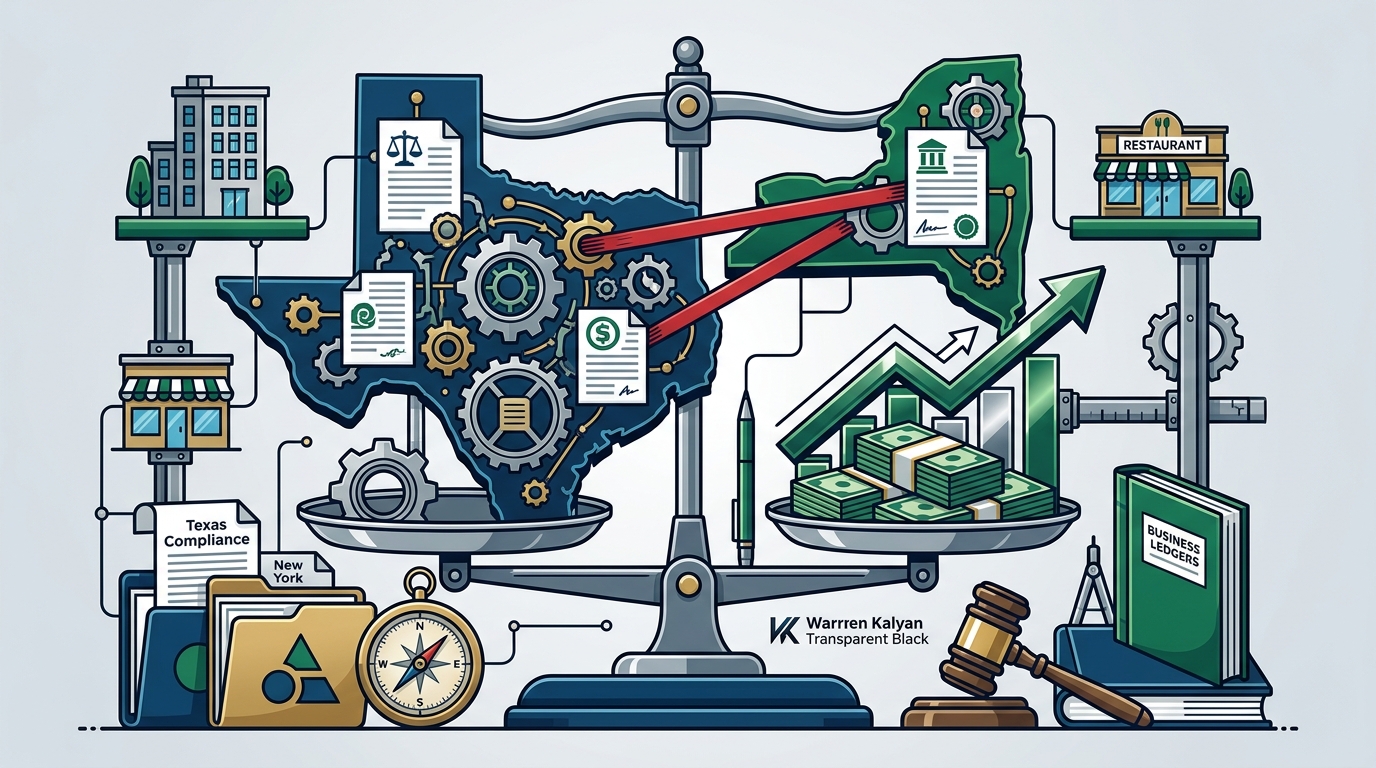
3. The Integrated Multi-State Firm Model
This model involves partnering with a single firm that has a presence in all relevant states. This approach offers consistency, streamlined communication, and deep expertise in specific industries across jurisdictions. Firms like Warren Kalyan specialize in this integrated approach, serving clients in both Texas and New York.
The benefit is a unified strategy. The firm understands how a decision in one state impacts operations in another. This holistic view is invaluable for businesses in sectors like hospitality and multifamily real estate, where regulatory environments are particularly complex.
The Cost-Benefit Framework
To determine the best model, businesses must evaluate costs against benefits. The following table summarizes the key factors.
| Model | Estimated Annual Cost | Expertise Depth | Strategic Alignment | Best For |
|---|---|---|---|---|
| Generalist In-House | $150,000 - $250,000 | Low to Medium | High | Single-state or early-stage expansion |
| Fragmented Local Counsel | $200,000 - $400,000+ | High (per state) | Low | Businesses with widely disparate legal needs |
| Integrated Multi-State Firm | $100,000 - $300,000 | High (cross-jurisdiction) | Very High | Multi-state expansion in specific industries |
As shown in the data, the integrated model often provides the best value by reducing redundant costs and preventing costly errors. According to industry benchmarks, businesses using integrated legal support see a 20% reduction in legal spend over three years compared to those using fragmented models.
Strategic Implementation Steps
Implementing a multi-state legal support strategy requires careful planning. Here are the key steps to ensure success.
Step 1: Assess Your Regulatory Footprint
Identify all states where you have a physical presence, employees, or significant revenue. Each state may trigger different legal obligations. For example, tax compliance and employment law vary significantly between Texas and New York.
Step 2: Define Your Core Legal Needs
Determine which areas of law are most critical to your business. For a hospitality business, liquor licensing and real estate law are paramount. For a tech company, intellectual property and employment contracts may be more important. Align your legal support model with these priorities.
Step 3: Evaluate Potential Legal Partners
Look for firms with a proven track record in your specific industry and target states. Check their client portfolio and team expertise. A firm that specializes in both transactional and litigation matters can provide a more comprehensive service.
Step 4: Establish Clear Communication Protocols
Ensure that your legal partner has a clear process for communicating updates and risks. Regular reporting on regulatory changes and compliance status is essential for proactive management.
Key Takeaways
- Compliance Costs Are Rising: Multi-state businesses face a 40% higher compliance burden, making legal strategy a financial priority.
- Integrated Models Offer Efficiency: Partnering with a firm like Warren Kalyan that operates in both Texas and New York can reduce legal spend by up to 20%.
- Industry Specialization Matters: Firms with deep expertise in hospitality or real estate provide better value than generalists.
- Proactive Management Prevents Fines: Regular monitoring of regulatory changes can prevent costly compliance errors.
- Unified Strategy Is Critical: A single legal partner ensures consistent strategy across all jurisdictions.
- Technology Enhances Service: Firms using digital tools can provide faster, more transparent service.
- Long-Term Partnership Pays Off: Building a relationship with a legal partner over time leads to better understanding and more effective support.
Frequently Asked Questions
What is the most cost-effective legal model for a business expanding to two states?
The most cost-effective model is typically an integrated multi-state firm that specializes in your industry. This approach reduces redundant costs and ensures consistent legal strategy.
How does Warren Kalyan handle multi-state compliance?
Warren Kalyan provides integrated legal support across Texas and New York, leveraging deep expertise in both jurisdictions to manage compliance, transactions, and litigation efficiently.
What are the risks of using fragmented local counsel?
Fragmented counsel can lead to inconsistent legal strategies, higher costs due to multiple hourly rates, and communication gaps that may result in compliance errors.
How often should I review my legal support model?
Businesses should review their legal support model annually or whenever they expand into new states or change their business model.
What industries benefit most from integrated legal support?
Industries with complex regulatory environments, such as hospitality, real estate, and healthcare, benefit most from integrated legal support.
Can a small business afford an integrated legal partner?
Yes. Many integrated firms offer scalable service models that allow small businesses to access high-level expertise without the cost of a full in-house team.
What is the role of technology in multi-state legal support?
Technology enables faster document management, real-time compliance monitoring, and seamless communication between legal teams and clients across different states.
Ready to Optimize Your Multi-State Legal Strategy?
Expanding your business across state lines requires more than just capital; it requires a strategic legal partner who understands the nuances of each jurisdiction. Warren Kalyan has been a trusted partner for businesses in Texas and New York for over four decades. We don't just advise. We execute, from formation through exit.
Contact us today to discuss how our integrated legal support can help you navigate the complexities of multi-state expansion. Visit our contact page to schedule a consultation.