

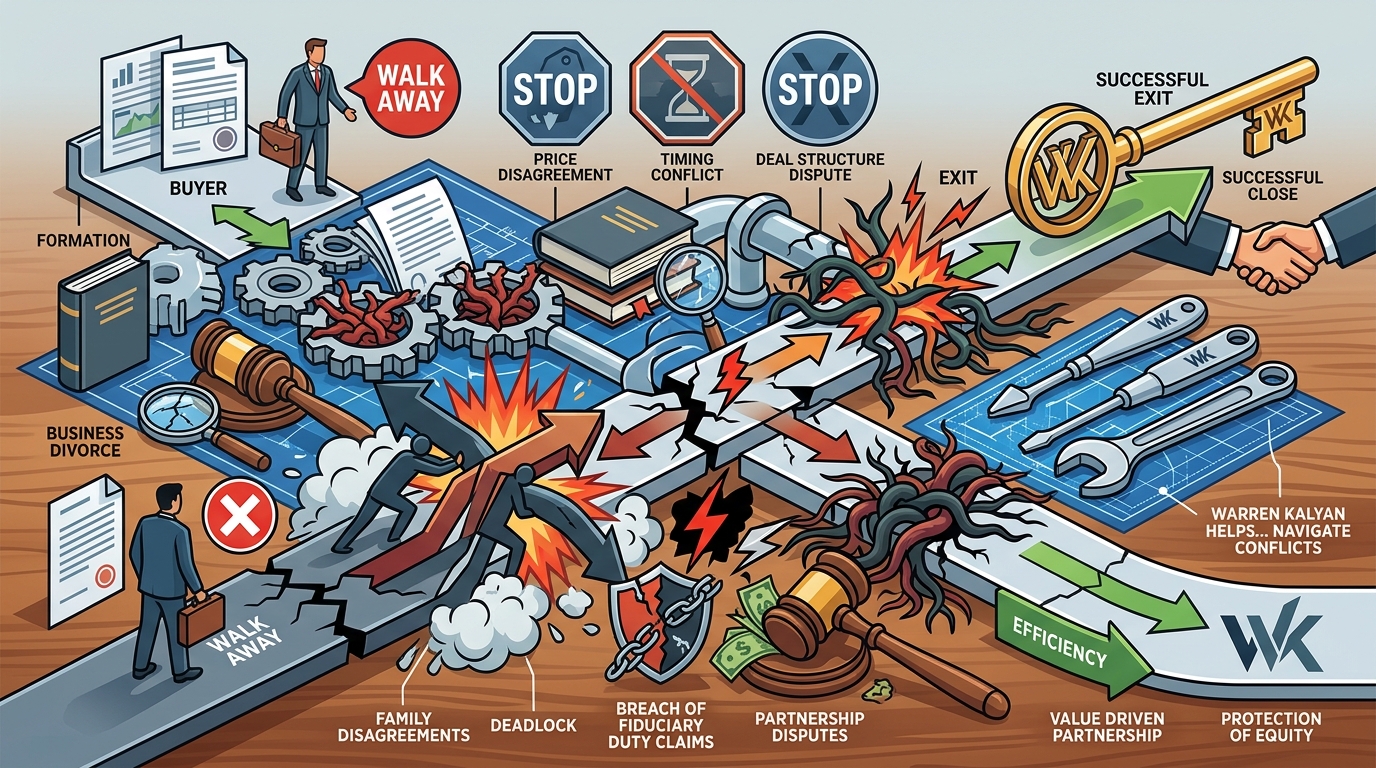
Family disagreements can derail a business sale by creating deadlock, triggering breach of fiduciary duty claims, or forcing a buyer to walk away. When owners cannot agree on price, timing, or deal structure, the transaction stalls. Warren Kalyan helps family-owned businesses navigate these conflicts to protect equity and close deals efficiently.
Fiduciary Duty and Minority Shareholder Rights
Majority owners owe fiduciary duties to minority shareholders, including the duty of care and the duty of loyalty. A fiduciary duty is a legal obligation to act in the best interest of the entity and its shareholders. If a majority owner pushes a sale that benefits them personally at the expense of minority holders, the minority can sue for breach of fiduciary duty. This risk is high in family businesses where relationships blur professional boundaries. Buyers often require indemnification for these potential claims, which can reduce the net proceeds for all owners. Understanding these duties is the first step in preparing for a sale.
Deadlock and Governance Failures
Family disagreements often manifest as governance deadlock, where owners cannot reach a quorum or a required vote to approve a sale. Deadlock is a state where the governing body of a company is unable to make decisions due to a tie or refusal to vote. Operating agreements and shareholder agreements often contain deadlock resolution mechanisms, such as buy-sell provisions or mediation clauses. If these mechanisms are absent or outdated, the company may be stuck. A buyer will view a company with unresolved internal deadlock as a high-risk asset. They may lower their offer or demand a lower valuation to account for the uncertainty. Reviewing your governance documents before listing the business is essential.
Valuation Disputes and Price Conflicts
Family members frequently disagree on the fair market value of the business, leading to protracted negotiations. Valuation is the process of determining the economic value of a business based on its assets, earnings, and market conditions. One family member may want to sell quickly for a lower price, while another may hold out for a higher bid. This internal conflict signals instability to potential buyers. Buyers may interpret the disagreement as a sign of deeper operational or cultural issues. To mitigate this, owners should agree on a valuation methodology and a minimum acceptable price before engaging with buyers. This unified front strengthens the negotiating position and protects the deal.
Buyer Due Diligence and Deal Risk
Buyers conduct thorough due diligence to identify legal and operational risks, including family disputes. Due diligence is the comprehensive evaluation of a target company prior to a merger or acquisition. If a buyer discovers ongoing litigation or unresolved ownership conflicts, they may terminate the deal or renegotiate terms. Family disputes can also affect key employee retention, as staff may leave if they perceive instability. This operational risk directly impacts the business's value. A clean, well-documented ownership structure reassures buyers and facilitates a smoother closing process. Proactive legal preparation helps present the business as a stable, investable asset.
Preparation Strategies for Family Owners
Family owners should take specific steps to prepare for a sale and minimize the impact of disagreements. First, review and update all governance documents, including operating agreements and shareholder agreements. Second, establish a clear communication protocol among family members to ensure everyone is aligned on deal terms. Third, engage independent legal counsel to advise on fiduciary duties and potential liabilities. Fourth, consider mediation or arbitration clauses to resolve internal disputes quickly. These steps demonstrate to buyers that the ownership group is organized and committed to a successful transaction. Preparation is the most effective way to protect the business's value and the family's relationships.
Key Takeaways
- Fiduciary duties require majority owners to act in the best interest of all shareholders, including minority family members.
- Deadlock in governance can stall a sale and reduce the business's value in the eyes of buyers.
- Buyers view unresolved family disputes as a significant legal and operational risk during due diligence.
- Updating governance documents and establishing clear communication protocols are critical preparation steps.
- Independent legal counsel can help navigate fiduciary duties and protect the transaction from internal conflicts.
Frequently Asked Questions
What is a fiduciary duty in the context of a family business sale?
A fiduciary duty is a legal obligation for majority owners to act in the best interest of the company and its shareholders. In a sale, this means ensuring the deal is fair to all owners, including minority family members.
Can a minority family member block a business sale?
Yes, if the governing documents require a supermajority vote or if the minority member has veto rights. This can lead to deadlock and delay the transaction.
How do family disputes affect the business valuation?
Family disputes can reduce the business valuation because buyers perceive higher risk. They may lower their offer to account for potential legal liabilities and operational instability.
What documents should I review before selling a family business?
You should review operating agreements, shareholder agreements, buy-sell agreements, and any existing litigation or dispute resolution clauses. These documents define the rights and obligations of all owners.
How can I prevent family disagreements from derailing a sale?
Establish clear communication protocols, agree on a unified valuation and price target, and engage independent legal counsel to guide the process and ensure compliance with fiduciary duties.
What happens if a buyer discovers a family dispute during due diligence?
The buyer may terminate the deal, renegotiate terms to include indemnification for potential claims, or lower their offer. Proactive resolution of disputes before listing the business is essential.
Next Steps for Family Business Owners
Family business owners should take proactive steps to prepare for a sale and mitigate the impact of internal disagreements. Reviewing governance documents, establishing clear communication protocols, and engaging independent legal counsel are critical first steps. Contact Warren Kalyan to discuss how our team can help you navigate the legal complexities of selling a family-owned business.