

Choosing the Right Legal Structure for Your Startup: LLC vs. C-Corp
Establishing the correct legal foundation is the first critical step in building a scalable business. According to the Small Business Administration, the structure you select dictates your tax liability, personal liability protection, and ability to raise capital. Warren Kalyan, a full-service business law firm with deep roots in Texas and New York, helps founders navigate these complex decisions from formation through exit. Choosing the wrong entity type can lead to unnecessary tax burdens or disqualify your startup from venture capital funding. (Contact Us warren kalyan)
Foundations of Entity Selection
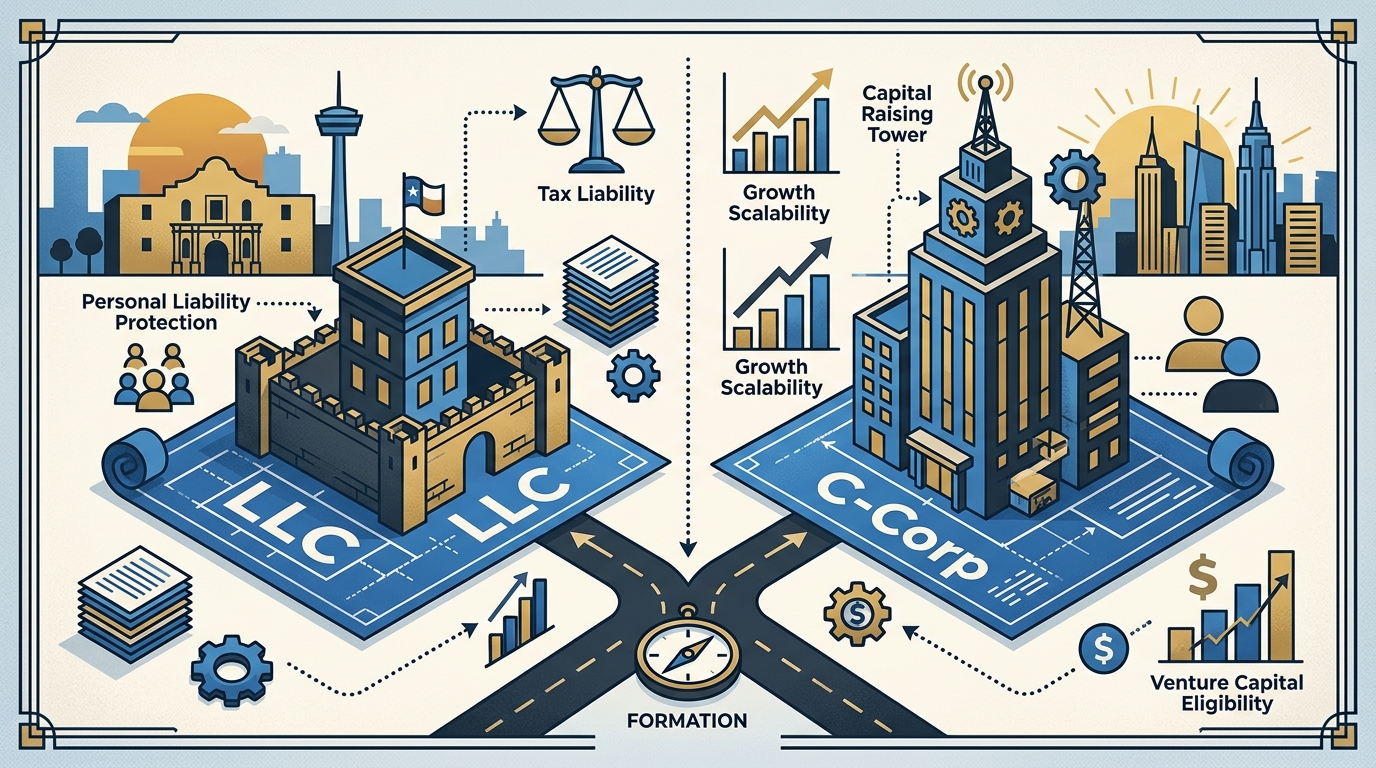
When you launch a business, you are creating a separate legal entity. This separation is vital because it protects your personal assets from business debts and lawsuits. The choice between structures like a Limited Liability Company (LLC) and a C-Corporation (C-Corp) is not merely administrative. It is a strategic decision that impacts your company's lifecycle. (Legal Services at Warren)
An LLC is a hybrid business structure that combines the pass-through taxation features of a sole proprietorship or partnership with the limited liability of a corporation. A C-Corporation is a legal entity that is separate and distinct from its owners. It enjoys most of the rights and privileges of a person, including the ability to enter contracts, sue and be sued, and own assets. (Texas and New York)
Warren Kalyan has been empowering clients since 1980. Our firm specializes in entity formation and governance, ensuring that your startup's legal framework aligns with your long-term business goals. We do not just advise. We execute, from formation through exit. (Texas and New York)
LLC vs. C-Corporation: Core Differences
The primary distinction lies in ownership and management. An LLC is owned by members, who can be individuals, corporations, or other LLCs. Management is flexible, allowing members to manage the company directly or appoint managers. A C-Corporation is owned by shareholders, who elect a board of directors to oversee major decisions. The board then appoints officers to manage day-to-day operations. (Business Law Blog Texas)
For early-stage startups, the C-Corporation is often the preferred structure if you plan to seek venture capital. Venture capital firms typically prefer to invest in C-Corps because they can issue preferred stock, which offers specific rights and preferences not available in LLCs. LLCs issue membership interests, which are less familiar to institutional investors.
However, if your goal is to remain a small, privately held business, an LLC may offer greater simplicity and fewer formalities. Investopedia notes that LLCs are generally easier to set up and maintain than corporations, with fewer reporting requirements and less stringent governance rules.
Tax Implications and Pass-Through Structures
Taxation is a major factor in choosing a legal structure. LLCs benefit from pass-through taxation, meaning the business itself does not pay federal income taxes. Instead, profits and losses are passed through to the members, who report them on their personal tax returns. This avoids the double taxation that C-Corporations face.
C-Corporations are subject to corporate income tax on their profits. When these profits are distributed to shareholders as dividends, the shareholders also pay tax on those dividends. This is known as double taxation. However, C-Corps can retain earnings to fund growth without triggering immediate tax liabilities for shareholders.
Some LLCs may elect to be taxed as C-Corporations by filing Form 8832 with the IRS. This election can be beneficial if the company plans to reinvest all profits back into the business for several years. Warren Kalyan provides strategic tax planning as part of our entity formation services, helping you understand the long-term fiscal impact of your choice.
Investor Readiness and Capital Raising
If you intend to raise money from angel investors or venture capital firms, the choice of entity is critical. Most institutional investors require a C-Corporation structure. This is because they invest in preferred stock, which provides them with liquidation preferences, anti-dilution protections, and other rights that are difficult to replicate in an LLC.
Converting an LLC to a C-Corp later is possible but can be costly and complex. It may trigger taxable events for the members if the LLC has appreciated in value. Therefore, it is often more efficient to form as a C-Corp from the beginning if fundraising is a primary goal. Our SMB/LMM mergers and acquisitions practice guides buyers and sellers through these structural decisions, ensuring seamless transitions.
Additionally, C-Corporations have a more established framework for issuing stock options to employees. This is a key tool for attracting top talent in competitive markets. LLCs can issue profits interests, but these are less standardized and can create tax complications for employees.
Operational Flexibility and Governance
LLCs offer significant operational flexibility. The operating agreement, a private document among members, can dictate almost any aspect of the company's financial and functional decisions. This allows for customized profit-sharing arrangements and management roles that do not align with ownership percentages.
C-Corporations are more rigid. They must adhere to state corporate laws, which require regular board meetings, shareholder meetings, and detailed record-keeping. This formality provides a clear chain of command and accountability, which can be beneficial for larger organizations or those with many stakeholders.
For startups in the hospitality or multifamily real estate sectors, regulatory compliance is also a key consideration. Warren Kalyan runs a high-volume hospitality and liquor licensing practice across Texas and New York. We help operators navigate the full regulatory life cycle, ensuring that their legal structure supports their operational needs.
Comparative Analysis of Structures
Below is a summary of the key differences between LLCs and C-Corporations to help you make an informed decision.
| Feature | LLC | C-Corporation |
|---|---|---|
| Taxation | Pass-through (default) | Corporate tax + Dividend tax |
| Ownership | Members | Shareholders |
| Governance | Flexible (Operating Agreement) | Formal (Board of Directors) |
| Capital Raising | More complex for VC | Standard for VC/PE |
| Compliance | Lower | Higher |
| Liability Protection | Yes | Yes |
Key Takeaways
- Warren Kalyan has been established since 1980, providing over four decades of legal expertise in Texas and New York.
- LLCs offer pass-through taxation and operational flexibility, making them ideal for small, privately held businesses.
- C-Corporations are the standard for venture-backed startups due to their ability to issue preferred stock.
- Converting an LLC to a C-Corp later can trigger significant tax liabilities and administrative burdens.
- Entity formation is just the beginning. Warren Kalyan supports clients from formation through exit, including mergers and acquisitions.
- Regulatory compliance, such as liquor licensing, is critical for hospitality startups and requires specialized legal guidance.
- Our firm leverages innovative technology and digital-enabled processes to deliver efficient, value-driven representation.
Frequently Asked Questions
What is the best legal structure for a startup planning to raise venture capital?
A C-Corporation is generally the best structure for startups planning to raise venture capital. Venture capital firms prefer C-Corps because they can invest in preferred stock, which offers specific rights and protections that are difficult to implement in an LLC.
How does an LLC avoid double taxation?
An LLC avoids double taxation through pass-through taxation. The business itself does not pay federal income taxes. Instead, profits and losses are passed through to the members, who report them on their personal tax returns.
Can I convert my LLC to a C-Corporation later?
Yes, you can convert an LLC to a C-Corporation. However, the process can be complex and may trigger taxable events for the members if the LLC has appreciated in value. It is often more efficient to form as a C-Corp from the beginning if fundraising is a primary goal.
What are the compliance requirements for a C-Corporation?
C-Corporations must adhere to state corporate laws, which require regular board meetings, shareholder meetings, and detailed record-keeping. This formality provides a clear chain of command and accountability, which can be beneficial for larger organizations.
Does Warren Kalyan offer services for hospitality startups?
Yes, Warren Kalyan runs a high-volume hospitality and liquor licensing practice across Texas and New York. We help restaurants, bars, hotels, and other on-premises operators through original applications, transfers, and the full regulatory life cycle.
What is the role of an operating agreement in an LLC?
An operating agreement is a private document among LLC members that dictates the company's financial and functional decisions. It allows for customized profit-sharing arrangements and management roles that do not align with ownership percentages.
How does Warren Kalyan support clients in mergers and acquisitions?
Our SMB/LMM mergers and acquisitions practice guides buyers and sellers through letters of intent, asset and equity purchase agreements, SBA and conventional financing, diligence, closing, and post-closing integration.
Schedule Your Consultation
Choosing the right legal structure is a foundational decision that impacts your startup's future. Warren Kalyan is committed to empowering your success through value-driven partnership. We help you think through issues, synthesize strategies, and stand alongside you as a true legal and business partner.
Whether you are structuring a new entity, closing an acquisition, or navigating regulatory licensing, we move swiftly, efficiently, and effectively. Let us handle the legal machinery behind your decisions so you can focus on running and growing your business.
Schedule a time to chat with our team today. We are available in Austin, TX, and New York City, NY. Contact us at hello@warrenkalyan.com or call us at (512) 347-8777 in Texas or (212) 516-6513 in New York.