

What should hospitality business owners know about negotiating better commercial lease terms?
Hospitality business owners should know that commercial lease terms directly impact their ability to operate, scale, and exit profitably. A well-negotiated lease protects cash flow, preserves operational flexibility, and aligns legal obligations with long-term business goals. At Warren Kalyan, we advise founders and operators across Texas and New York that the lease is not just a real estate document, but a core business asset that requires strategic negotiation from the outset.
Understanding Lease Structure and Key Definitions
Commercial lease negotiation begins with understanding the fundamental structure of the agreement. A commercial lease is a legally binding contract that defines the rights and obligations of both the landlord and the tenant regarding the use of the property. For hospitality venues, the specific type of lease structure determines how much financial risk the operator assumes. Most hospitality businesses operate under either a gross lease or a net lease, each with distinct implications for budgeting and cash flow management.
Gross vs. Net Leases
In a gross lease, the landlord covers most operating expenses, including property taxes, insurance, and maintenance. In a net lease, the tenant assumes responsibility for some or all of these costs. A triple net lease is a specific arrangement where the tenant pays base rent plus property taxes, insurance, and maintenance costs. Hospitality operators must carefully model these expenses, as net leases can significantly increase monthly outlays if not properly negotiated.
Negotiating Operational Flexibility and Use Clauses
Operational flexibility is critical for hospitality businesses that may need to adapt their offerings over time. The permitted use clause in a lease defines exactly what activities the tenant can conduct on the premises. A broad use clause is a provision that allows the tenant to operate various types of hospitality services, such as food and beverage, retail, and events, without requiring landlord approval for each change. Restrictive use clauses can limit a business's ability to pivot or expand, potentially forcing a costly renegotiation or early termination.
Exclusivity and Competition
Exclusivity clauses are provisions that prevent the landlord from leasing adjacent or nearby spaces to direct competitors. For a restaurant or bar, securing an exclusivity clause can protect market share and customer traffic. However, landlords often resist broad exclusivity terms, so operators must negotiate the scope and duration of these protections carefully. A well-drafted exclusivity clause can be a significant competitive advantage in dense urban markets like Austin or New York City.
Structuring Financial Terms and Rent Escalations
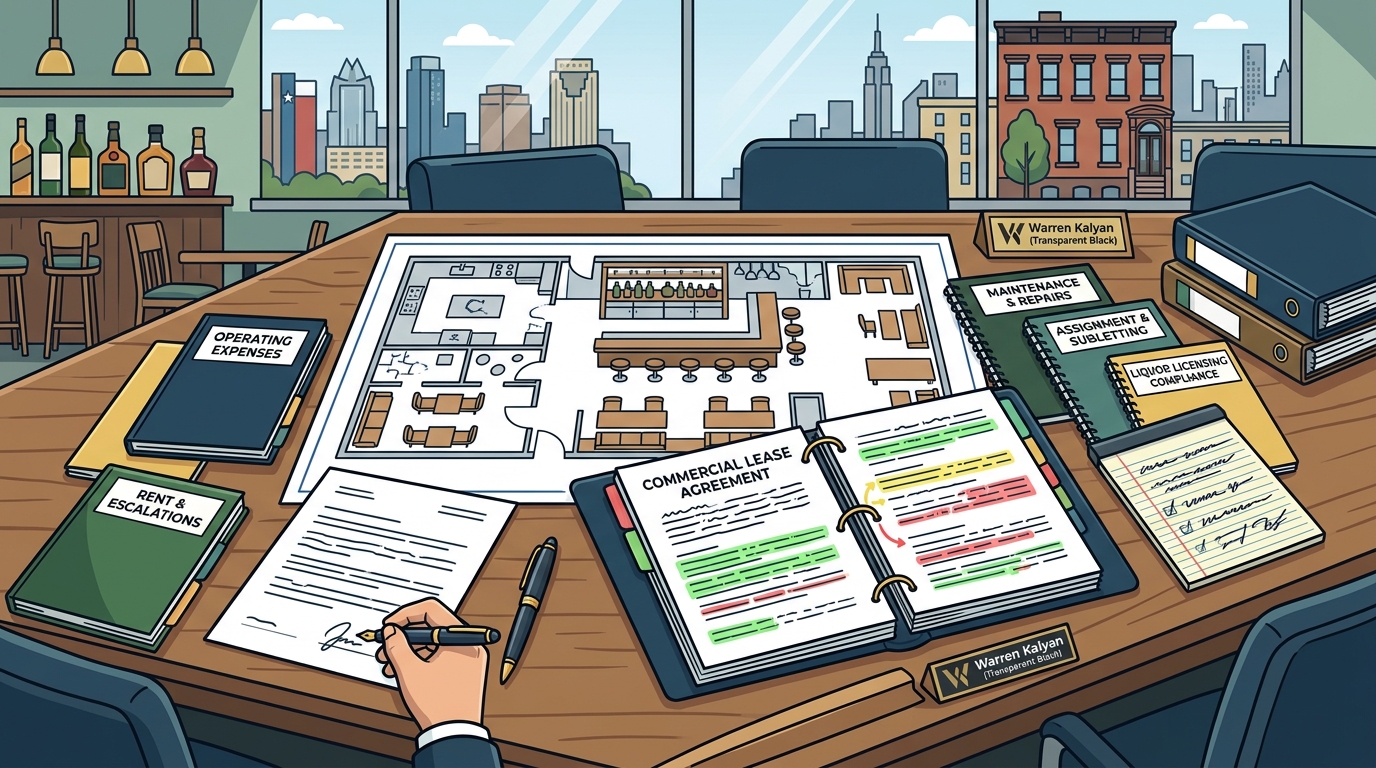
Financial terms form the core of any commercial lease negotiation. Base rent is the fixed monthly payment the tenant owes the landlord for the use of the property. Negotiating favorable rent escalations is essential for long-term affordability. Fixed percentage increases are common, but operators should seek caps or adjustments tied to inflation indices to protect against unexpected cost spikes. Additionally, understanding how operating expense reimbursements are calculated is crucial, as these can erode the benefits of a low base rent.
Operating Expense Reimbursements
Operating expense reimbursements are payments the tenant makes to the landlord to cover shared property costs. These reimbursements are often calculated based on the tenant's proportionate share of the total property expenses. Operators should negotiate clear definitions and caps on these reimbursements to avoid unexpected financial burdens. Transparent expense reporting and audit rights are essential components of a fair lease agreement.
Aligning Lease Terms with Licensing and Compliance
Regulatory Modifications
Regulatory modifications are changes to the property required to comply with licensing or safety regulations. These modifications can be costly and time-consuming, so operators should negotiate who bears the cost and responsibility for these changes. A well-drafted lease will clearly outline the process for obtaining landlord approval for regulatory modifications and the timeline for completion. This alignment between lease terms and regulatory requirements is essential for avoiding compliance issues that could disrupt operations.
Planning for Exit and Renewal Options
Exit strategies and renewal options are often overlooked in lease negotiations but are critical for long-term business planning. A renewal option is a provision that allows the tenant to extend the lease term under predefined conditions. Negotiating favorable renewal terms can provide stability and protect the business's investment in the location. Additionally, understanding the conditions for early termination is essential, as it can provide a safety net if the business no longer fits the space or if market conditions change.
Early Termination Clauses
Early termination clauses are provisions that allow the tenant to end the lease before the expiration date under specific circumstances. These clauses can be triggered by events such as a change in ownership, a breach of contract by the landlord, or a significant change in market conditions. Operators should negotiate clear and reasonable conditions for early termination to minimize financial exposure. A well-structured exit strategy can protect the business's equity and provide flexibility in a dynamic market.
Key Takeaways
- Commercial lease terms directly impact a hospitality business's ability to operate, scale, and exit profitably.
- Understanding the difference between gross and net leases is essential for accurate financial modeling.
- Broad use clauses and exclusivity provisions can provide significant competitive advantages.
- Negotiating caps and clear definitions for operating expense reimbursements protects cash flow.
- Lease terms must align with licensing and regulatory requirements to avoid compliance risks.
- Renewal options and early termination clauses provide flexibility and protect long-term investment.
Frequently Asked Questions
What is the most important clause to negotiate in a hospitality lease?
The permitted use clause is often the most important, as it defines the scope of operations the tenant can conduct. A broad use clause provides flexibility to adapt the business over time, while a restrictive clause can limit growth and pivot opportunities.
How do net leases affect hospitality business budgets?
Net leases require the tenant to pay for property taxes, insurance, and maintenance, which can significantly increase monthly costs. Operators must carefully model these expenses to ensure the business remains financially viable under a net lease structure.
Can a lease prevent a restaurant from obtaining a liquor license?
A lease can indirectly prevent a restaurant from obtaining a liquor license if it restricts the tenant's ability to modify the premises for compliance purposes. Operators should ensure the lease allows for necessary regulatory modifications to support licensing applications.
What is a typical lease term for a hospitality venue?
Typical lease terms for hospitality venues range from five to ten years, depending on the type of business and the landlord's preferences. Longer terms provide stability, while shorter terms offer more flexibility for operators who may need to adapt their space.
How can operators protect themselves from unexpected operating expense increases?
Operators can protect themselves by negotiating caps on operating expense reimbursements and requiring transparent expense reporting. Audit rights are also essential for verifying the accuracy of expense calculations and ensuring fair reimbursement amounts.
What role does a law firm play in commercial lease negotiation?
A law firm provides strategic guidance on lease structure, financial terms, and regulatory compliance. At Warren Kalyan, we help hospitality operators negotiate leases that align with their business goals and protect their long-term interests.
Conclusion
Negotiating better commercial lease terms is a critical step for hospitality business owners seeking to build a sustainable and profitable operation. By understanding key definitions, securing operational flexibility, structuring favorable financial terms, aligning with regulatory requirements, and planning for exit, operators can protect their investment and position their business for long-term success. At Warren Kalyan, we provide the strategic counsel and practical expertise needed to navigate complex lease negotiations. To discuss your specific lease needs, for a consultation.