

Choosing between an LLC and a corporation to shield personal assets depends on your specific risk profile and state laws. Both structures provide a legal separation between the business and the owner, but they differ in how they handle creditor claims and personal liability. Warren Kalyan advises founders and operators in Texas and New York to evaluate these distinctions carefully before formation. This guide breaks down the core liability protections of each entity type to help you make an informed decision.
The Core Mechanism of Limited Liability
Limited liability is a legal principle that prevents business creditors from seizing an owner's personal assets to satisfy business debts. When you form an LLC or a corporation, you create a separate legal entity. This entity can own property, enter contracts, and incur debt in its own name. If the business fails or faces a lawsuit, the financial exposure generally stops at the business's assets. Your personal home, car, and savings remain protected from business creditors. This separation is the primary reason most entrepreneurs choose to incorporate rather than operate as a sole proprietorship.
However, this protection is not absolute. The legal concept of the corporate veil describes the barrier between the entity and its owners. If a court determines that the owner treated the business as a mere alter ego of themselves, they may pierce the corporate veil. This allows creditors to reach personal assets. To maintain this shield, you must keep business and personal finances strictly separate. You should use dedicated bank accounts, maintain accurate records, and avoid commingling funds. Consistent adherence to formalities is the key to preserving limited liability.
LLC Liability Protections and Flexibility
A Limited Liability Company (LLC) is a hybrid business structure that combines the liability protection of a corporation with the tax flexibility of a partnership. LLCs are popular among small business owners because they offer strong asset protection with less administrative burden. In Texas and New York, LLCs are governed by state statutes that explicitly limit the personal liability of members for the debts and obligations of the company. This means that if your LLC is sued for a contract dispute or a minor accident, your personal assets are generally safe.
One specific advantage of the LLC structure is its flexibility in management and taxation. You can choose to be taxed as a sole proprietorship, partnership, or corporation. This flexibility allows you to optimize your tax position without sacrificing liability protection. For example, a single-member LLC in Texas can operate with minimal formalities while still enjoying the liability shield. However, you must still file the required annual reports and maintain a registered agent. Failure to comply with state requirements can jeopardize your standing and, by extension, your liability protection.
Corporate Liability and the Corporate Veil
A corporation is a legal entity that is distinct from its shareholders. It has the power to issue stock, enter into contracts, and sue or be sued. The liability of shareholders is limited to the amount they invested in the company. This means that if a corporation incurs debt or faces a lawsuit, shareholders cannot be held personally liable for those obligations. The corporate veil is the legal doctrine that enforces this separation. Courts will only pierce this veil in cases of fraud, undercapitalization, or a complete failure to observe corporate formalities.
Corporations require more formalities than LLCs to maintain their liability protection. You must hold regular board meetings, keep minutes, and maintain a clear record of shareholder actions. You must also issue stock certificates and maintain a stock ledger. These formalities create a paper trail that demonstrates the corporation is operating as a separate entity. If you fail to follow these procedures, a court may find that the corporation was a sham. In such cases, the corporate veil may be pierced, exposing shareholders to personal liability. This is why legal counsel is essential when forming and operating a corporation.
Personal Guarantees and Exceptions to Limited Liability
Even with an LLC or corporation, you can still be personally liable for certain obligations. The most common exception is the personal guarantee. When you sign a personal guarantee for a business loan, lease, or contract, you are personally promising to pay if the business cannot. This guarantee bypasses the liability shield. If the business defaults, the creditor can come after your personal assets. This is a critical distinction that many entrepreneurs overlook. Before signing any document, you should understand whether you are signing as an individual or on behalf of the entity.
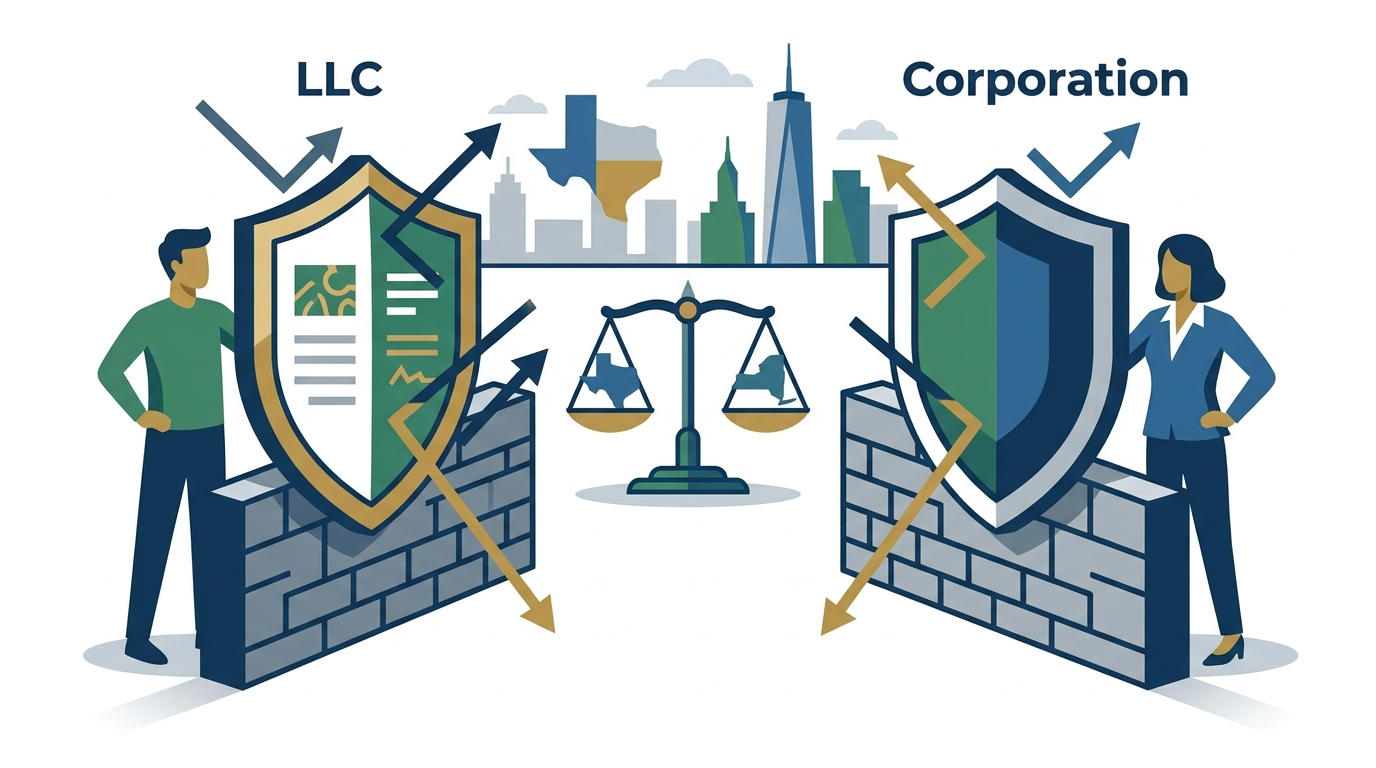
Choosing the Right Structure for Your Risk Profile
The choice between an LLC and a corporation should be driven by your specific risk profile and business goals. If you are a single owner or a small group of partners, an LLC may be the best fit. It offers strong liability protection with less administrative complexity. If you are raising venture capital or planning to go public, a corporation may be the better choice. Investors often prefer the familiar structure of a corporation, and it is easier to issue stock and manage equity. However, both structures provide the core benefit of limited liability. The key is to choose the structure that aligns with your long-term goals and to operate it correctly.
At Warren Kalyan, we help clients navigate these decisions with a focus on practical, results-oriented counsel. We understand the nuances of Texas and New York law and can guide you through the formation process. We also provide ongoing support to ensure that your entity remains in good standing and that your liability protection is maintained. Whether you are forming a new business or restructuring an existing one, we are here to help you protect your personal assets and achieve your business goals.
Key Takeaways
- Both LLCs and corporations provide limited liability protection, separating personal assets from business debts.
- The corporate veil can be pierced if you fail to maintain formalities or commingle funds.
- Personal guarantees bypass the liability shield, making you personally liable for the guaranteed obligation.
- LLCs offer tax flexibility and less administrative burden, making them popular for small businesses.
- Corporations require more formalities, such as board meetings and stock issuance, to maintain liability protection.
- Personal torts and statutory liabilities can still expose you to personal liability, regardless of entity type.
- Consulting with an attorney is essential to ensure your entity is formed and operated correctly.
Frequently Asked Questions
Does an LLC protect my personal assets from all business liabilities?
No, an LLC protects your personal assets from business debts and most lawsuits, but it does not protect you from personal guarantees or personal torts. If you sign a personal guarantee or commit a wrongful act, you can still be held personally liable.
What is the difference between an LLC and a corporation in terms of liability?
Both provide limited liability, but corporations require more formalities to maintain the corporate veil. LLCs have fewer formalities, making them easier to manage, but both structures offer similar core liability protections.
Can a creditor reach my personal assets if my business fails?
Generally, no. If your business is an LLC or corporation, creditors can only reach the business's assets. However, if you signed a personal guarantee or if the corporate veil is pierced, they may reach your personal assets.
How do I prevent the corporate veil from being pierced?
You can prevent the corporate veil from being pierced by maintaining separate bank accounts, keeping accurate records, holding regular meetings, and avoiding commingling of funds. Consistent adherence to formalities is key.
Is it better to form an LLC or a corporation for liability protection?
Both structures provide strong liability protection. The choice depends on your specific needs. LLCs are often better for small businesses due to their flexibility, while corporations may be better for companies raising venture capital or planning to go public.
Do I need a lawyer to form an LLC or corporation?
While you can form an entity on your own, it is highly recommended to consult with a lawyer. A lawyer can help you choose the right structure, draft operating agreements or bylaws, and ensure that you are in compliance with state laws.
Protect Your Assets with Expert Legal Guidance
Choosing the right business structure is a critical decision that can have long-term implications for your personal financial security. By understanding the differences between LLCs and corporations, you can make an informed choice that aligns with your goals and risk profile. Warren Kalyan is here to guide you through this process, providing the expertise and support you need to protect your personal assets and build a successful business. Contact us today to schedule a consultation and take the first step toward securing your financial future.