

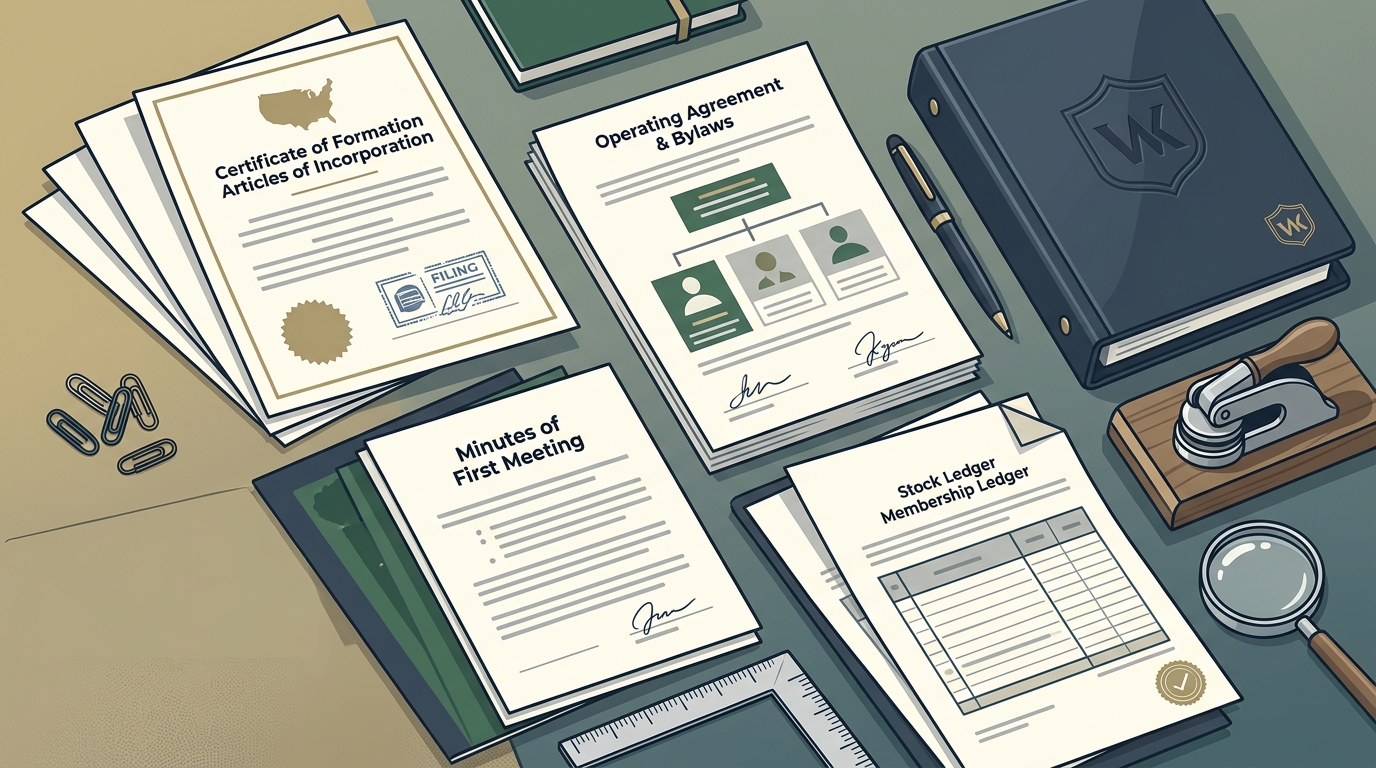
Founders often ask what formation documents they actually need to start a business. The core requirement is filing a certificate of formation or articles of incorporation with the state, followed by creating an operating agreement or bylaws. The IRS notes that most businesses start small and must follow basic steps to ensure compliance. Warren Kalyan advises that proper documentation protects your personal assets and clarifies ownership from day one.
State Filings and Entity Registration
The first legal step is registering your entity with the state. For an LLC, this involves filing a certificate of formation. For a corporation, you file articles of incorporation. The IRS explains that forming a corporation triggers specific tax responsibilities and required forms. In Texas, the Secretary of State handles these filings. In New York, the Department of State manages the process. Filing the wrong document or missing a required field can delay your launch or create compliance issues later.
Choosing the Right Entity Type
Your choice between an LLC and a corporation dictates which state forms you need. LLCs offer flexibility in management and taxation. Corporations provide a formal governance structure that may be required for venture capital funding. Warren Kalyan helps founders align their entity choice with their long-term financial and control goals. The state filing is the public record of your business existence.
Internal Governance Documents
State filings make your business public, but internal documents control how it operates. An operating agreement is the foundational contract for an LLC. It defines member rights, profit distribution, and management structure. For corporations, bylaws serve a similar purpose by outlining board procedures and officer duties. These documents are not filed with the state, but they are critical for legal protection. Without them, default state laws may govern your business, which might not align with your intentions.
Defining Ownership and Control
Internal documents must clearly state who owns what percentage of the company. This prevents disputes if a member wants to leave or if a new investor joins. Warren Kalyan emphasizes that legal structuring early prevents costly issues later. Equity allocation should be documented in writing, even for small partnerships. Clear definitions of voting rights and decision-making authority reduce the risk of deadlock in management. according to Employer identification number
Employer Identification Numbers and Tax Compliance
Before you can open a business bank account or hire employees, you need an Employer Identification Number (EIN). An EIN is a nine-digit number issued by the IRS to identify a business entity for tax purposes. The IRS requires you to enter your business name as it appears on your registration documents when applying. This number is essential for federal tax reporting, payroll, and banking. It is distinct from your state tax ID, which you may also need depending on your location and business activities.
Banking and Financial Separation
Local Licenses and Permits
State and federal filings are not enough to operate legally. You must also obtain local business licenses and permits. These vary by city and county. For example, a restaurant in Austin needs different permits than a consulting firm in New York City. Warren Kalyan assists clients with administrative and regulatory affairs at the state, county, and municipal levels. Failing to secure the right local permits can result in fines or forced closure. Research your specific industry requirements in your local jurisdiction. according to Start a Business
Industry-Specific Regulatory Requirements
Key Takeaways
- File the correct state formation document, such as a certificate of formation for LLCs or articles of incorporation for corporations.
- Create internal governance documents like an operating agreement or bylaws to define ownership and management.
- Obtain an EIN from the IRS to handle federal taxes and open business bank accounts.
- Secure all necessary local business licenses and permits for your specific city and industry. according to Checklist for starting
- Keep business and personal finances separate to protect your personal assets.
- Consult with a legal professional to ensure your formation documents align with your long-term business goals.
Frequently Asked Questions
Do I need a lawyer to file formation documents?
You can file formation documents yourself, but a lawyer can help you avoid common mistakes. Legal advice ensures your documents protect your interests and comply with state laws. Warren Kalyan offers initial consultations to help you navigate the process.
What is the difference between an LLC and a corporation?
LLCs offer flexibility in management and taxation, while corporations provide a formal governance structure. Corporations are often preferred by companies seeking venture capital. The choice depends on your funding needs and operational preferences.
How long does it take to form a business?
State filing times vary. In Texas, it can take a few days to a few weeks. In New York, it may take longer. Processing times depend on the state and the completeness of your application. Local permits can add additional time to the process.
Do I need a registered agent?
Yes, most states require a registered agent to receive legal documents on behalf of your business. The registered agent must have a physical address in the state where you are forming the entity. You can serve as your own agent or hire a professional service.
Can I change my business name after formation?
Yes, you can file an amendment with the state to change your business name. You will also need to update your EIN, bank accounts, and other records to reflect the new name. This process involves additional filing fees and paperwork.
What happens if I don't file annual reports?
Failing to file annual reports can result in penalties and the administrative dissolution of your entity. This means your business is legally closed by the state. You may lose your right to operate and face personal liability for debts. Keep track of your state filing deadlines.
Next Steps for Founders
Starting a business requires more than just an idea. It requires a solid legal foundation. By understanding the essential formation documents, you can protect your assets and set your company up for success. Contact Warren Kalyan to schedule a consultation and ensure your formation documents are tailored to your specific needs. Our team is committed to empowering your success through value-driven partnership, from formation through exit.